
Transmission Slipping in Las Vegas? 7 Warning Signs You Shouldn’t Ignore (2026 Guide)
United Auto Care Center — Trusted Auto Repair in Las Vegas Since 2017
If your car suddenly feels like it's hesitating between gears, revving without picking up speed, or "slipping" while you're merging onto the 215 or crawling down the Strip, you're dealing with one of the most common — and most misunderstood — transmission problems in Las Vegas. And in a city where summer pavement temperatures regularly climb past 150°F, transmission slipping isn't just an inconvenience. It's usually the first sign that your fluid is breaking down faster than it should.
Here's what's actually happening under the hood, the warning signs to watch for, and when it's time to get it looked at before a $400 fluid service turns into a $4,000 rebuild.
What Does "Transmission Slipping" Actually Mean?
Transmission slipping happens when your transmission fails to stay locked in the correct gear, causing the engine RPMs to rise without a matching increase in speed. It can feel like your car is momentarily in neutral, followed by a jerk or delay as it "catches" the next gear. In automatic transmissions, this is often caused by worn clutch packs, a failing torque converter, or transmission fluid that's too thin, too dirty, or too low to maintain proper hydraulic pressure.
In Las Vegas specifically, heat accelerates this process. Transmission fluid is rated to handle high temperatures, but constant exposure to 100°F+ ambient heat, plus asphalt radiating even hotter, plus stop-and-go traffic on the Strip or I-15, pushes fluid past its breakdown point faster than in milder climates. Once fluid loses its viscosity and lubricating properties, internal components start grinding against each other with less protection — and slipping is usually the first symptom you'll notice from the driver's seat.
7 Signs of Transmission Problems Las Vegas Drivers Should Never Ignore
- Slipping gears — RPMs surge but the car doesn't accelerate at the same rate.
- Delayed shifting — a noticeable pause before the transmission engages, especially from park to drive.
- Rough or hard shifting — clunking or jerking between gears instead of smooth transitions.
- Burning smell — often the clearest sign of overheated, degraded transmission fluid.
- Fluid leaks — reddish or brownish spots under your vehicle, especially after parking on hot asphalt.
- Check engine or transmission warning light — modern vehicles log error codes long before you feel a problem.
- Whining, humming, or clunking noises — can indicate internal wear in the torque converter or gear sets.
If you're noticing even one of these, it's worth a diagnostic scan before your next long drive to Los Angeles, Phoenix, or St. George. Transmission failure on the highway is one of the most common — and most preventable — causes of roadside breakdowns in the Las Vegas Valley.
Why Transmission Problems Get Worse Faster in Las Vegas
Three local driving realities make transmission wear a bigger issue here than almost anywhere else in the country:
- Extreme heat. High ambient and pavement temperatures accelerate fluid oxidation, reducing its ability to lubricate and cool internal components.
- Stop-and-go traffic. Frequent starting and stopping on Las Vegas Boulevard, Sahara Ave, or Rainbow Blvd during peak hours keeps the transmission working harder and running hotter for longer stretches.
- Long highway trips. Many Las Vegas drivers regularly put in 200+ mile round trips to Los Angeles or Utah, which stresses a transmission that's already running hot in daily traffic.
This combination is exactly why transmission problems are among the most searched automotive repair topics in Las Vegas — and why waiting on early symptoms almost always costs more in the long run.
Transmission Repair Cost in Las Vegas: What to Expect
Costs vary widely depending on what's actually wrong, but here's a general range to help you budget:
- Transmission fluid exchange: Often the fix for early-stage slipping caused by degraded fluid — the most affordable option when caught early.
- Solenoid or sensor replacement: A moderate repair addressing electronic shifting issues without opening the transmission case.
- Transmission rebuild: A more involved repair replacing worn internal components like clutch packs, bands, and seals.
- Full transmission replacement: The most expensive option, typically needed when internal damage is extensive or a rebuild isn't cost-effective for the vehicle.
The single biggest factor in your final cost is how early the problem is caught. A fluid exchange addressed at the first sign of slipping is dramatically cheaper than a rebuild after months of driving on failing fluid.
How United Auto Care Center Diagnoses Transmission Slipping
At United Auto Care Center, we've been repairing transmissions for Las Vegas drivers since 2017, and heat-related transmission failure is one of the most common issues we see walk through the door. Our process starts with:
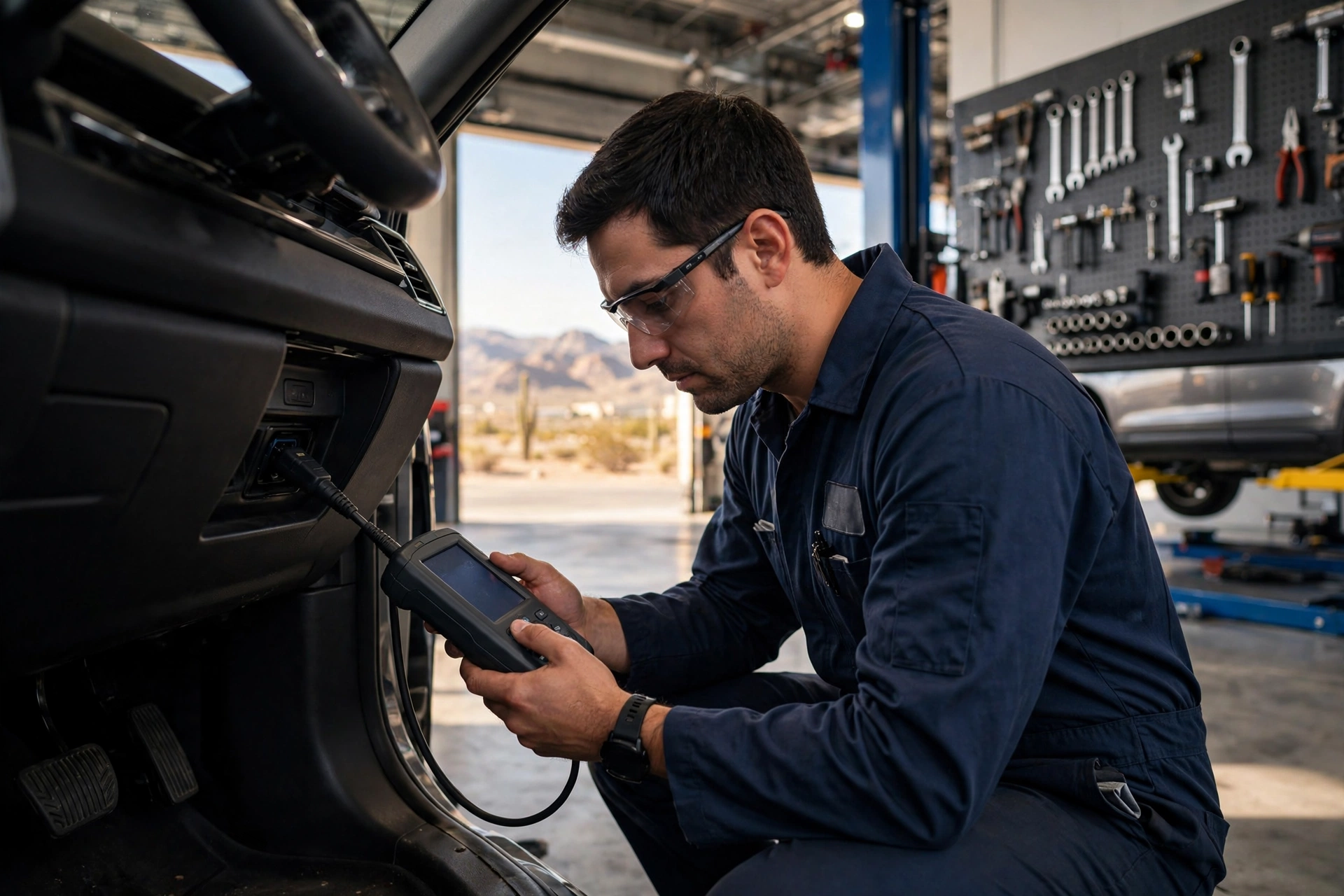
- Advanced diagnostic scanning to pull transmission control module error codes and identify the root cause before we touch anything
- Fluid condition and pressure testing to check whether a fluid exchange can resolve the issue before recommending a rebuild
- A full inspection of seals, mounts, and cooling lines, since heat-damaged transmission mounts and coolant lines are common contributors to overheating in desert climates
- A clear, honest estimate before any work begins, so you know exactly what you're paying for and why
Every repair comes backed by our 12-month/12,000-mile warranty on most repairs, so you're covered after you're back on the road.
Frequently Asked Questions
Extreme heat causes transmission fluid to break down faster, reducing its ability to lubricate and maintain the hydraulic pressure needed to keep gears engaged. This is significantly more common in desert climates like Las Vegas than in cooler regions.
It's not recommended. Driving with a slipping transmission accelerates internal wear and increases the risk of complete transmission failure, often turning an affordable repair into a full rebuild or replacement.
Pricing depends on your vehicle's make and model, but a fluid exchange is almost always significantly cheaper than a rebuild — which is why catching slipping early matters so much.
Because of the extreme heat, many Las Vegas mechanics recommend more frequent transmission fluid service than the manufacturer's standard interval, especially for vehicles regularly driven in stop-and-go traffic or on long highway trips.
Not necessarily. Slipping is often an early warning sign that, if addressed quickly, can be resolved with a fluid exchange or minor repair — before it progresses to full transmission failure.
Don't Wait for a Breakdown on the Strip or I-15
Transmission slipping rarely fixes itself, and in Las Vegas heat, it tends to get worse fast. If you've noticed any of the warning signs above, get a diagnostic scan before your next road trip.
United Auto Care Center — Trusted transmission repair in Las Vegas since 2017. Certified technicians, advanced diagnostics, and a 12-month/12,000-mile warranty on most repairs.
📍 Serving Las Vegas and surrounding areas
📞 (702) 444-4468 |
✉️ info@unitedautocarecenter.com
🕐 Mon – Sat: 8:00 AM – 6:00 PM