

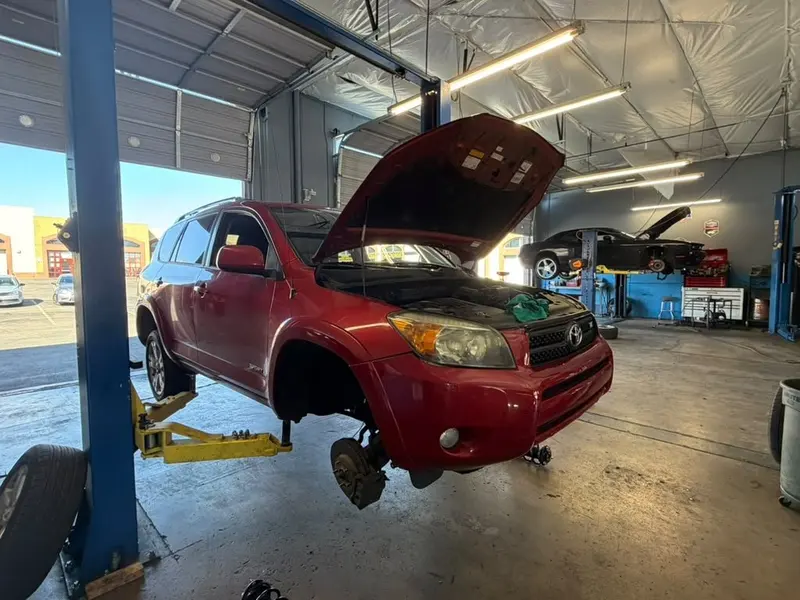
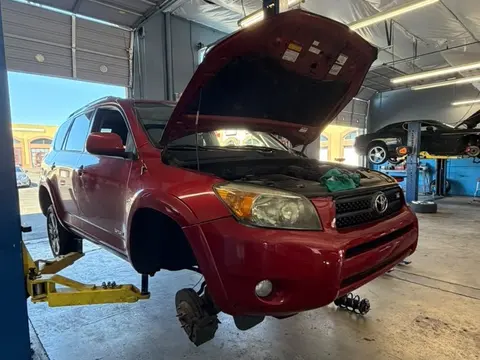
A 2008 Toyota RAV4 at our shop at 3560 E Tropicana Ave in Las Vegas, in for shock replacement. Here is what the customer told us, what we found and what we did.
Repair Performed
Shock absorbers replaced.
About This Repair
Shocks control how the suspension moves after a bump. Worn ones let the vehicle bounce, dip under braking and lean more in turns, and they can lengthen stopping distances. The photo shows the RAV4 on the lift with the suspension apart and the old assembly on the floor.
Signs a 2008 Toyota RAV4 Needs New Shocks
On a 2008 Toyota RAV4, worn shocks usually show up gradually, which makes them easy to overlook. The most common sign is a floaty or bouncy ride, where the SUV keeps moving up and down after a dip or speed bump instead of settling right away. You may also notice the nose diving forward when you brake firmly, the body leaning more than it used to in corners, or the rear end feeling loose on uneven pavement. Clunks or knocks over bumps can point to worn mounts or bushings, which often get checked at the same time. Look at the shock bodies too, since an oily, wet film suggests fluid is leaking out. Uneven, scalloped wear on the tires is another clue, because a tire that bounces loses steady contact with the road and wears in patches. A RAV4 that feels less planted on the highway or gets pushed around more by crosswinds may also be telling you the dampers are tired.
What Wears Out the Shocks on a RAV4 in Las Vegas
Every shock contains oil that is forced through small valves each time the suspension moves, turning that motion into heat. Over time the seals harden, the oil breaks down and the valving loses its ability to control movement. Desert heat in Las Vegas can speed up this process, since hot pavement and high summer temperatures add to the heat the shocks already generate. Rubber parts such as mounts, dust boots and bushings can also dry out and crack after long exposure to sun and heat. Rough roads, potholes, construction zones and dirt driveways put extra stress on the suspension, and so does regularly carrying heavy cargo or towing. A RAV4 used for weekend trips into the desert or the mountains may see faster wear than one driven gently around town. Even a vehicle that sits for long stretches can develop dried seals and slow leaks, so low use does not always mean the shocks are in good shape.
What to Do When Your RAV4's Ride Changes
If your RAV4 starts feeling bouncy, wallows in turns or dips hard when you brake, it is worth having the suspension checked rather than waiting. Worn shocks do more than make the ride uncomfortable. They can reduce how well the tires grip during braking and sudden maneuvers, and they add wear to tires, springs and other suspension parts. A simple check you can do at home is to look for oily residue on the shocks and watch whether the vehicle settles quickly after a bump. Beyond that, bring it in so the cause can be diagnosed, since noises and handling changes can also come from tires, wheel alignment, ball joints, sway bar links or bushings. Shocks are generally replaced in pairs on the same axle so both sides respond evenly. When front suspension parts are taken apart, an alignment check afterward is often a good idea to protect your tires and keep the steering feeling straight.