

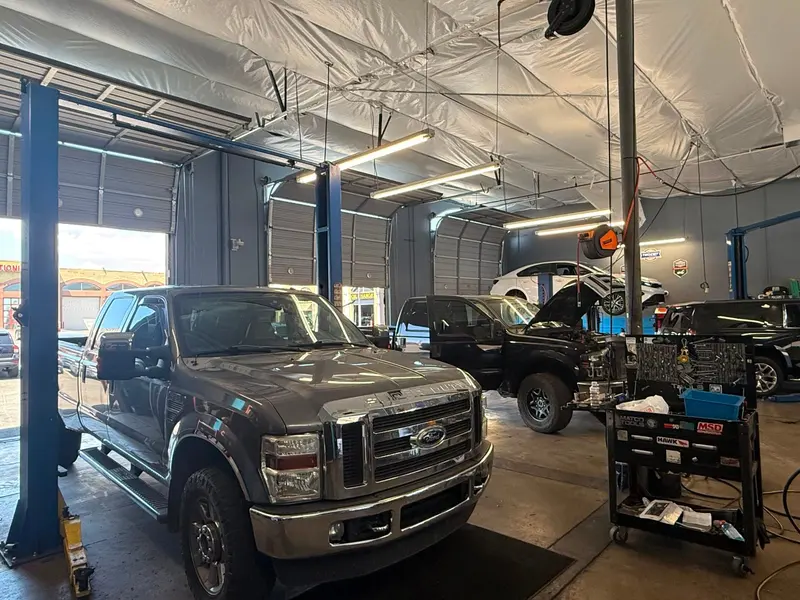
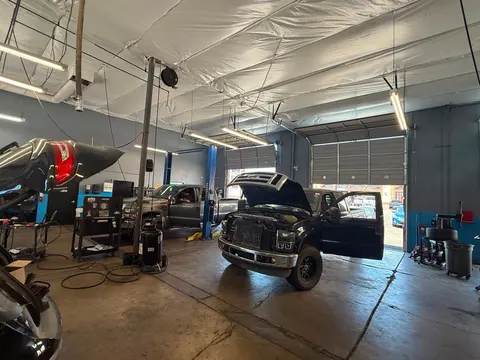
A 2009 Ford F-350 at our shop at 3560 E Tropicana Ave in Las Vegas, in for hesitation while driving. Here is what the customer told us, what we found and what we did.
Customer Concern
The customer reported that the truck hesitated while driving.
Diagnosis
We inspected the truck to find the source of the hesitation instead of replacing parts on a guess.
About This Repair
Hesitation can come from the fuel system, ignition, air intake, sensors or the transmission, and they can feel alike from the driver's seat. Finding the actual cause first is what keeps the repair bill to the part that needs it.
Signs a 2009 Ford F-350 Has a Hesitation Problem
Hesitation in a heavy-duty truck like the 2009 Ford F-350 usually shows up as a stumble or pause when you press the accelerator, especially when pulling away from a stop, merging onto the freeway or climbing a grade. Some owners describe it as a flat spot where the engine seems to bog before it catches up. You might also notice the truck surging at steady speeds, jerking under light throttle or feeling sluggish when towing or hauling a load. A check engine light may come on, or it may stay off entirely, which is why hesitation can be easy to ignore at first. Other clues include rough idle, poorer fuel economy, a shift that feels late or harsh, or more smoke than usual from a diesel exhaust. Paying attention to when the hesitation happens, such as cold starts, hot afternoons or heavy loads, gives a technician useful information.
What Causes Hesitation in a 2009 Ford F-350
The 2009 F-350 was offered with gas and diesel engines, and the likely causes differ a bit between them. On gas trucks, worn spark plugs, weak ignition coils, a clogged fuel filter, a tired fuel pump or dirty injectors can cause the engine to starve for fuel or misfire under load. A dirty mass airflow sensor, a sticky throttle body or a vacuum leak can throw off the air and fuel mixture. On diesel trucks, contaminated fuel, restricted fuel filters, injector problems, a sticking turbocharger or a clogged exhaust gas recirculation system can cause a bog when accelerating. Faulty sensors, such as the throttle position or crankshaft position sensor, can affect both. Transmission issues like slipping or torque converter problems can also feel like engine hesitation. In Las Vegas, desert heat adds stress to fuel pumps, coils and wiring, so problems often show up first on hot days.
What to Do When Your F-350 Hesitates
When you first notice hesitation, take note of the conditions: whether the engine is cold or warm, how fast you are going, whether you are towing and whether the check engine light is on or flashing. A flashing light usually points to an active misfire, and continuing to drive hard can damage the catalytic converter on a gas truck, so ease off and get it checked soon. Avoid heavy towing or long climbs until the cause is known, since added load tends to make hesitation worse and can stress other parts. It is tempting to start with a bottle of fuel additive or a new part from the parts store, but guessing often costs more in the end. Bring it in so the cause can be diagnosed with scan data, live sensor readings and a road test that recreates what you are feeling.