

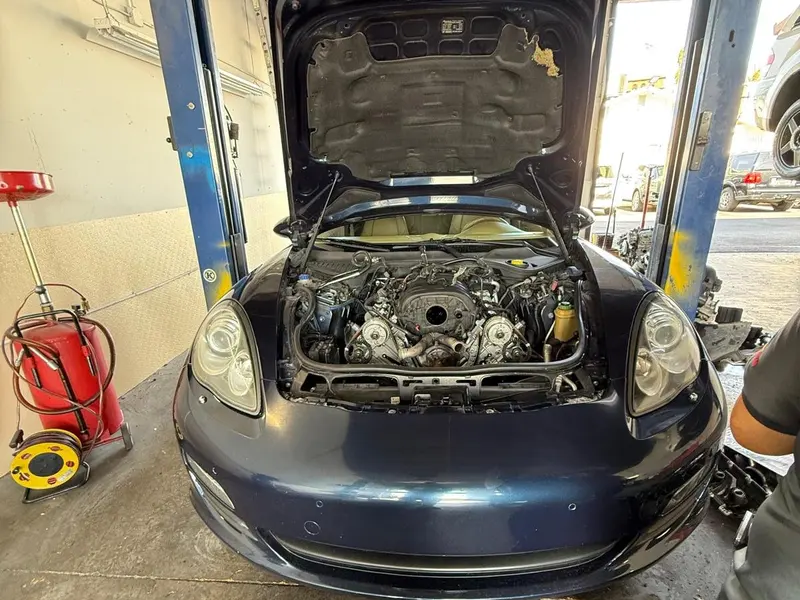
A 2013 Porsche Panamera at our shop at 3560 E Tropicana Ave in Las Vegas, in for timing kit replacement. Here is what the customer told us, what we found and what we did.
Customer Concern
The Panamera came in for work on its engine timing system.
Diagnosis
Inspection showed the engine needed a timing kit replacement.
Repair Performed
Timing kit replaced.
About This Repair
The timing system keeps the crankshaft and camshafts turning in step, so the valves open and close at the right moment. A timing kit typically covers the chain or belt along with the guides and tensioners that hold it in place. On the Panamera it is a labour-heavy job with the front of the engine opened up, as the photo shows.
Signs a 2013 Porsche Panamera Needs a Timing Kit Replacement
On a 2013 Porsche Panamera, timing components usually give some warning before they fail. One of the most common signs is a rattling or slapping noise from the front of the engine. It is often loudest for a few seconds after a cold start, while a worn tensioner builds oil pressure and takes up slack. A check engine light is another clue, especially when stored codes point to camshaft and crankshaft correlation or cam timing that is out of range. Some drivers notice rough idle, hesitation, reduced power, or poorer fuel economy because the valves are no longer opening at exactly the right moment. In more advanced cases the engine may be hard to start or may misfire. Metal particles found in the oil during a service can also hint at wear in the guides or the chain itself. Any of these symptoms deserves attention sooner rather than later.
What Causes Timing Chain, Guide and Tensioner Wear in the Panamera
Timing chains are built to last a long time, but the parts around them wear gradually. Plastic or composite guides can harden, crack, or wear grooves after years of heat cycling, and tensioners can lose their ability to hold the chain tight. As slack increases, the chain itself can stretch slightly as its pins and links wear. Oil condition plays a big role, since the chain and tensioners rely on clean oil at proper pressure. Stretched oil change intervals, low oil level, or the wrong oil specification can speed up wear. Short trips that never let the engine fully warm up add to sludge and moisture buildup. Here in Las Vegas, desert heat puts extra stress on engine oil and plastic components, which can shorten their working life. Hard driving and long idle periods in summer traffic contribute as well.
What to Do When Your Panamera Shows Timing Symptoms
If you hear a new rattle at startup or see a check engine light, try not to ignore it. Note when the noise happens, whether it fades as the engine warms, and any change in how the car drives. Check the oil level and keep up with oil changes using the specification Porsche calls for. Avoid hard acceleration and high revs until the cause is known, because a chain that jumps a tooth or a guide that breaks apart can lead to serious internal engine damage. Bring it in so the cause can be diagnosed with a scan tool and a careful inspection, since some symptoms overlap with other issues like a faulty camshaft adjuster or sensor. When a timing kit is needed, replacing the chain, guides, and tensioners together helps restore proper timing and avoids reopening the engine later for parts that were left behind.