

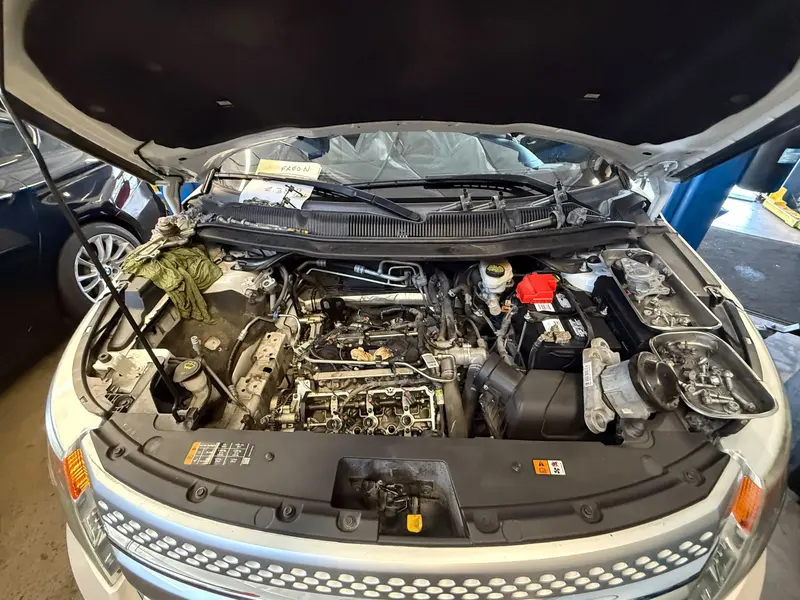
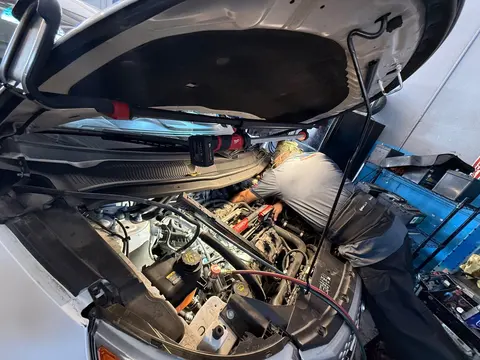
A 2015 Ford Explorer at our shop at 3560 E Tropicana Ave in Las Vegas, in for water pump service. Here is what the customer told us, what we found and what we did.
Customer Concern
The Explorer needed water pump service.
Repair Performed
Water pump serviced.
About This Repair
The water pump circulates coolant through the engine and radiator. When it leaks or stops pumping well, the engine can start running hot, and overheating is what turns a cooling repair into an engine repair. As the photos show, getting to the pump on this Explorer means opening up a crowded engine bay.
Signs a 2015 Ford Explorer Needs Water Pump Service
The most common early sign is coolant loss. You may find yourself topping off the reservoir more often than usual, or notice a sweet smell after driving. On many versions of the 2015 Ford Explorer, the water pump sits inside the engine behind the timing cover, so a failing pump does not always drip onto the driveway. Instead, coolant can seep into the engine oil, which may show up as milky or tan residue on the dipstick or oil fill cap. Other warning signs include a temperature gauge that climbs higher than normal, especially in traffic or on hot afternoons, and heater output that turns lukewarm. Steam or a coolant odor from under the hood is another clue. A low coolant warning on the dash is also worth taking seriously. Any of these symptoms means the cooling system should be checked soon.
What Causes Water Pump Failure on an Explorer
Water pumps wear out gradually. Inside the pump, a shaft spins on a bearing, and a seal keeps coolant from escaping along that shaft. Over time the seal hardens and the bearing loosens, which allows coolant to weep past it. Old or contaminated coolant speeds this up, because worn-out coolant loses its ability to protect metal and lubricate the seal, and debris can scour internal surfaces. Mixing incompatible coolant types or topping off with plain water can contribute as well. Heat is another factor. Las Vegas summers keep engines working near the top of their temperature range, and repeated heat cycles are hard on seals, gaskets, and hoses. On engines where the pump is driven by the timing chain, the chain, guides, and pump are often inspected together, since they all live behind the same cover.
What to Do When Your Explorer Starts Running Hot or Losing Coolant
If the temperature gauge starts rising, ease off, turn off the air conditioning, and set the heater to full hot to pull some heat away from the engine. If the gauge keeps climbing or you see steam, pull over somewhere safe and shut the engine off. Never open the radiator cap or coolant reservoir on a hot engine, since pressurized coolant can cause serious burns. Once things cool down, check the coolant level and look at the oil dipstick for any milky appearance. Avoid driving an Explorer that is losing coolant into the oil, because diluted oil cannot properly protect bearings and other internal parts. Even a slow leak is worth addressing early, before it turns into an overheating event. Bring it in so the cause can be diagnosed, since a leaking hose, radiator, or thermostat housing can mimic water pump trouble.