

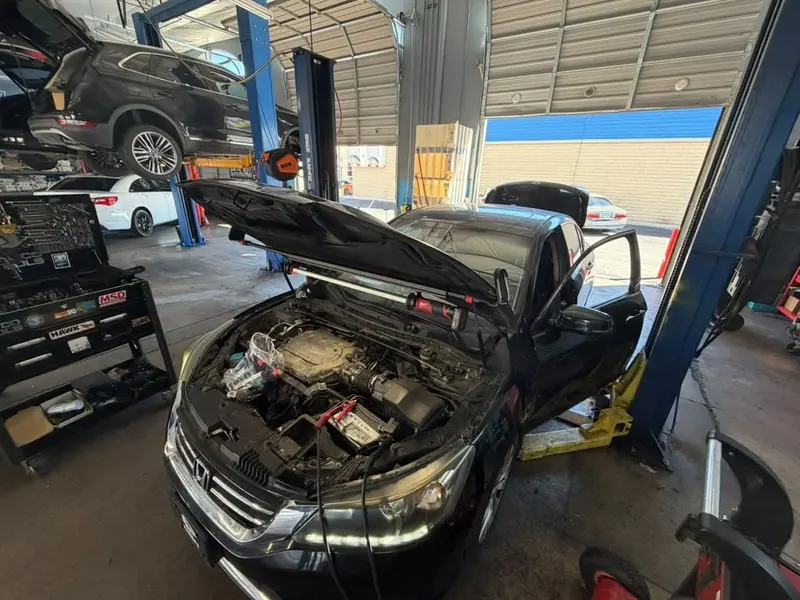
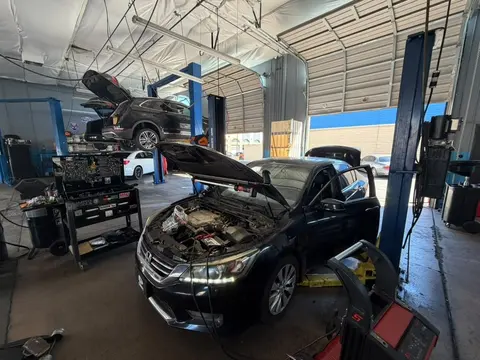
A 2015 Honda at our shop at 3560 E Tropicana Ave in Las Vegas, in for transmission replacement. Here is what the customer told us, what we found and what we did.
Repair Performed
Transmission replaced: the old unit removed and the replacement installed.
About This Repair
A transmission replacement means supporting the engine, disconnecting the drivetrain and the transmission's lines and wiring, lowering the old unit out and installing the replacement. It is one of the larger jobs a shop does, and the vehicle spends that time on the lift.
Signs a 2015 Honda Needs Transmission Replacement
Transmission problems in a 2015 Honda usually show up gradually before they become serious. Common warning signs include delayed engagement when shifting into drive or reverse, harsh or slipping shifts, and engine speed that rises without the car accelerating to match. Some drivers notice shuddering at low speeds, a whining or grinding noise that changes with road speed, or a burning smell after driving. A check engine light or a flashing transmission indicator can also point to an internal fault. Depending on the model, a 2015 Honda may use a conventional automatic or a continuously variable transmission, and the symptoms can feel a little different between the two. Fluid that looks dark or smells burnt, or reddish spots under the car, are worth paying attention to as well. Not every symptom means the transmission must be replaced, but several together often suggest internal wear.
What Causes a Honda Transmission to Fail
Most transmission failures come down to heat, fluid condition and wear over time. Transmission fluid lubricates, cools and transmits hydraulic pressure, so when it breaks down or runs low, clutches, bearings and other internal parts wear faster. In Las Vegas, desert heat adds stress, especially for vehicles that sit in stop-and-go traffic, tow, or carry heavy loads on hot days. High temperatures speed up fluid breakdown and can harden seals, which may lead to leaks. Skipped fluid services, the wrong type of fluid, and ignoring small leaks are common contributors. Electrical issues such as a faulty sensor, solenoid or wiring problem can mimic internal failure, which is why diagnosis matters before any major repair. Once internal parts are badly worn or damaged, though, replacing the transmission is often a more practical path than repairing individual components.
What to Do When Your Honda Transmission Acts Up
If your Honda starts shifting oddly, slipping, or making new noises, it is wise to limit driving and have it checked soon. Continuing to drive with a failing transmission can turn a smaller problem into more extensive damage, and a sudden loss of drive can be unsafe in traffic. Start by checking for leaks under the car and noting when the symptom happens, such as when the engine is cold, after highway driving, or only in reverse. Those details help a technician narrow down the cause. Avoid adding random additives or fluid types, since Honda transmissions are designed for specific fluids. Bring it in so the cause can be diagnosed with a scan for stored codes, a fluid inspection and a road test. From there you can decide between a repair, a fluid service, or a full transmission replacement with a clear picture of the vehicle's condition.