

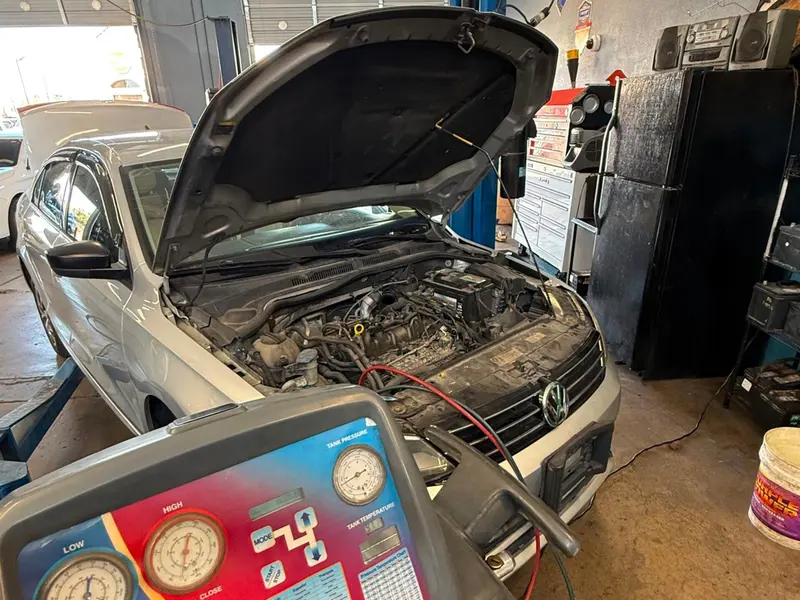
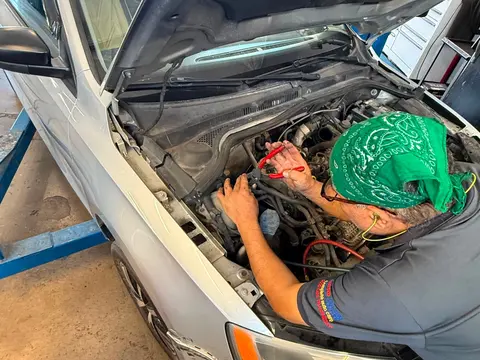
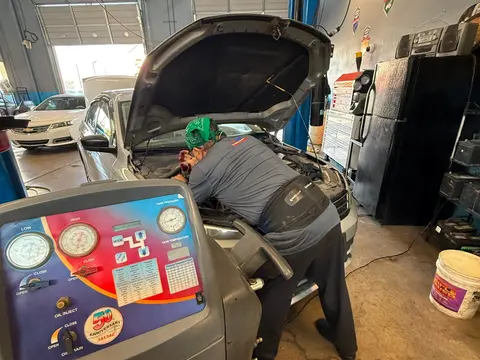
A 2016 Volkswagen at our shop at 3560 E Tropicana Ave in Las Vegas, in for refrigerant recovery before engine replacement. Here is what the customer told us, what we found and what we did.
Customer Concern
The car was being prepared for an engine replacement.
Repair Performed
Before any A/C lines were disconnected, we recovered the refrigerant from the A/C system with a recovery machine.
About This Repair
Refrigerant may not simply be vented into the air. Before A/C components or the engine around them are disconnected, the refrigerant has to be pulled out with recovery equipment, the machine in the photos. It is the first step of a bigger job, and it lets the system be recharged properly afterwards.
Why a 2016 Volkswagen Needs Refrigerant Recovery Before Engine Replacement
On a 2016 Volkswagen, the A/C compressor bolts directly to the engine, and refrigerant lines run through the engine bay to the condenser, evaporator and expansion valve. When the engine has to come out, those lines, and often the compressor itself, must be disconnected or moved out of the way. The system is sealed and holds refrigerant under pressure, so opening a fitting while it is still charged would release refrigerant into the air and could cause frostbite-type injuries to anyone nearby. Recovering the refrigerant first empties the system safely and keeps the refrigerant contained in the machine. It also protects the A/C components, because a system that is opened while still under pressure can push oil out and then draw in moisture and dirt. Doing this step at the very start keeps the rest of the engine swap cleaner and safer for everyone working on the car.
What Happens During A/C Refrigerant Recovery on a Volkswagen
A recovery machine connects to the low side and high side service ports on the A/C lines using sealed couplers. Once it is running, it draws refrigerant out of the system, separates it from the compressor oil that circulates with it, and stores the refrigerant in a tank. Many machines also report how much refrigerant came out. That figure can be a useful clue, since a system that held far less than its specified amount probably had a leak somewhere, which is worth knowing before the car is put back together. The machine also captures a small amount of oil, and that is noted so the correct amount can be added back later. When recovery is finished, the system sits at little or no pressure, and the lines can be disconnected without spraying refrigerant. Open fittings are usually capped to keep moisture and debris out while the engine work continues.
Recharging the A/C After the Engine Goes Back In
Once the replacement engine is installed and the compressor and lines are reconnected, the A/C system needs more than a simple refill. Fresh seals are typically used at fittings that were opened, since old ones can flatten and leak once disturbed. The system is then placed under vacuum for a period of time to pull out air and moisture, because moisture mixed with refrigerant and oil can form acids and ice that damage internal parts. Holding that vacuum also works as a basic leak check. After that, the correct type and amount of refrigerant is added by weight, along with any oil that was lost, following the specification printed on the label under the hood. In the desert heat of Las Vegas, an accurate charge matters a lot, since an overcharged or undercharged system can blow warm air and put extra strain on the compressor.