

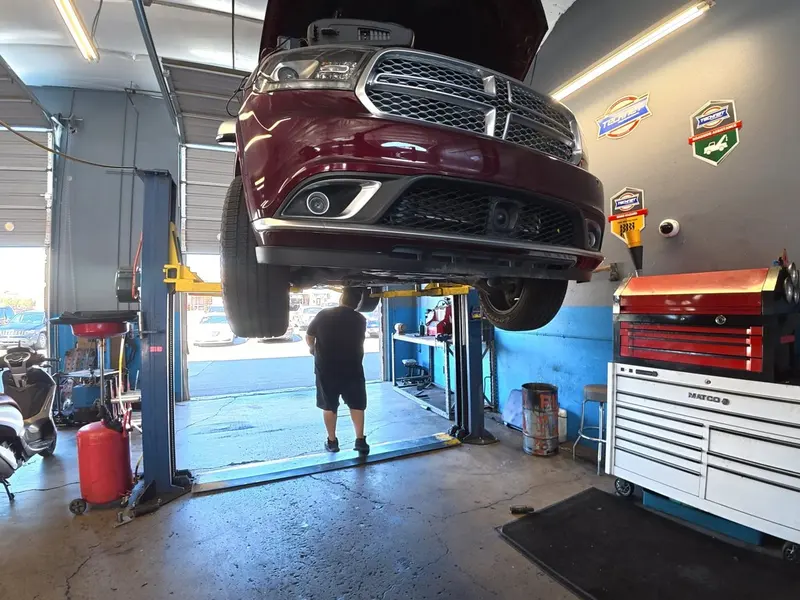
A 2017 Dodge Durango at our shop at 3560 E Tropicana Ave in Las Vegas, in for fuse box short diagnosis. Here is what the customer told us, what we found and what we did.
Customer Concern
The Durango would not start in the mornings.
Diagnosis
Diagnostic testing found an electrical short in the fuse box.
About This Repair
Intermittent no-starts are hard to pin down, because the vehicle behaves differently from one day to the next. The battery, starter, charging system, wiring, fuses and relays can all be the cause, so we tested rather than guessed. Here the trouble was a short at the fuse box.
Signs a 2017 Dodge Durango Has a Fuse Box Short
A short in the fuse box can show up in ways that seem unrelated, which is why it often gets mistaken for a weak battery or a bad starter. On a 2017 Dodge Durango, common signs include a no-start or slow crank that happens some mornings but not others, a battery that keeps going dead overnight, and fuses that blow repeatedly. You might also notice flickering dash lights, warning messages that come and go, power windows or locks acting up, or accessories that work one day and not the next. Some owners hear clicking from under the hood when they turn the key or press the start button. A burning smell, melted plastic, or discoloration around the fuse box cover is a more serious sign and should not be ignored. Because the symptoms are intermittent, keeping notes on when they happen can help a technician narrow things down.
What Causes a Short in a Durango Fuse Box
A short happens when current finds a path it was never meant to take, usually to ground or between circuits. In a fuse box, sometimes called a power distribution center, that can come from corroded terminals, loose or overheated connections, cracked circuit board traces, or moisture that gets inside the housing. Wiring that rubs against metal brackets can wear through its insulation and short out nearby. Aftermarket accessories such as remote starters, lighting, or audio equipment that were tapped into the wrong circuit can also overload connections over time. In Las Vegas, desert heat adds stress, because repeated heating and cooling makes plastic brittle and can loosen terminals. Cool mornings can make a marginal connection behave differently than it does on a hot afternoon, which helps explain why a problem may appear at the start of the day and disappear later.
What to Do When Your Durango Won't Start Some Mornings
If your Durango refuses to start or the battery keeps draining, avoid repeatedly replacing fuses or swapping parts in hopes of a quick fix. Installing a higher rated fuse is especially risky, since the fuse is there to protect wiring from overheating. If you smell burning or see smoke, stop using the vehicle and keep it parked away from anything flammable. A jump start may get you moving, but it does not solve an underlying short, and a parasitic drain will likely return. Write down what you notice, such as which accessories misbehave and whether weather or time of day seems to matter. Then bring it in so the cause can be diagnosed. Proper testing checks the battery, starting and charging systems, and the fuse box circuits, so the actual fault is found instead of guessed at.