

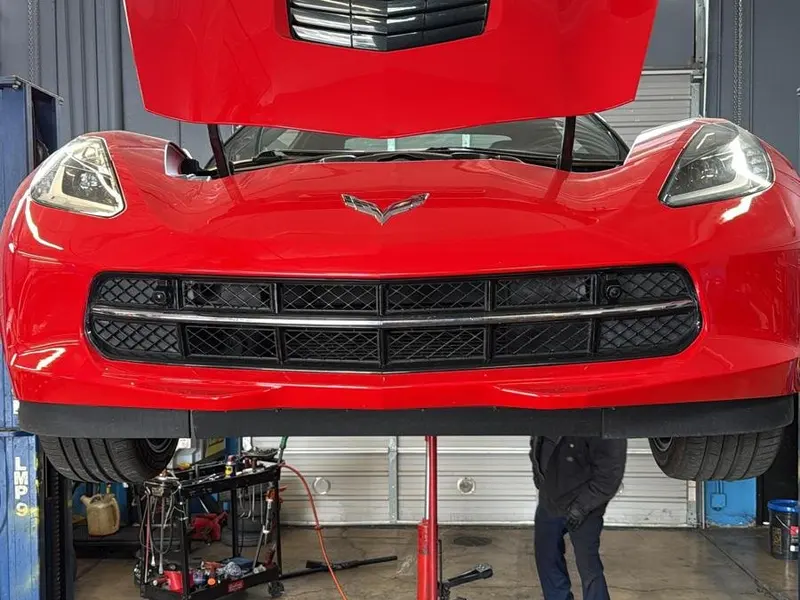
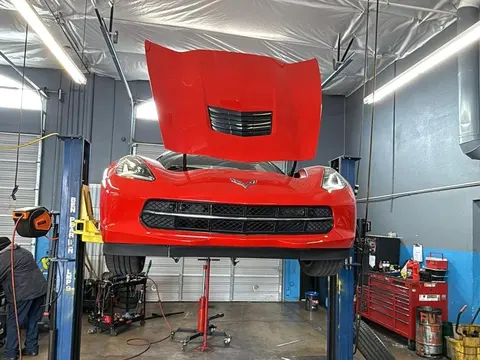
A Chevrolet Corvette at our shop at 3560 E Tropicana Ave in Las Vegas, in for differential service. Here is what the customer told us, what we found and what we did.
Customer Concern
The Corvette needed service on its differential.
Repair Performed
Differential serviced.
About This Repair
Differential trouble can show up as noise, vibration or a fluid leak from the rear of the car. Service starts with an inspection of the housing, seals and fluid, and the work that follows depends on what that inspection finds.
Signs a Chevrolet Corvette Needs Differential Service
The differential in a Chevrolet Corvette sits at the rear of the car and splits engine power between the rear wheels, letting them turn at different speeds through corners. When it needs attention, the first clue is often a sound. A whine or howl that changes with speed, a clunk when shifting into gear or getting on and off the throttle, or a chatter or groan during tight, slow turns in a parking lot can all point toward the differential. Some owners notice a vibration through the seat that seems to come from behind them. Others spot drips or an oily film near the rear of the car, or smell hot gear oil after a drive. Because a Corvette is built for spirited driving, small changes in how the rear end feels or sounds are worth taking seriously early.
What Causes Differential Problems in a Corvette
Most differential trouble comes down to the gear oil. Over time the fluid breaks down from heat and pressure, loses its ability to protect the gears and bearings, and picks up tiny metal particles from normal wear. Hard acceleration, track days and quick launches all put extra load on that fluid. Desert heat in Las Vegas adds to the stress, since high temperatures can speed up fluid breakdown and dry out rubber seals. When seals or gaskets harden and crack, fluid can seep out, and running low leads to faster wear. Many performance cars, including the Corvette, use a limited-slip design that relies on the correct fluid and, in some cases, a friction modifier additive. Using the wrong fluid can cause chatter in turns. Worn bearings, damaged gears or tired mounts can also create noise and vibration.
What to Do When You Notice Corvette Differential Symptoms
If your Corvette starts making new noises from the rear or you see fluid under the back of the car, it is best not to ignore it. Pay attention to when the symptom happens, such as during acceleration, coasting, turning or shifting, because that detail helps a technician narrow down the cause. Check your parking spot for drips and note the color and smell, since gear oil usually has a strong, distinct odor. Avoid hard launches and aggressive driving until the car has been looked at, as extra load can make existing wear worse. Bring it in so the cause can be diagnosed. An inspection typically looks at the fluid level and condition, the seals and housing, and any signs of metal in the oil. Catching a problem early often means a simpler fix than waiting until the noise gets louder.