

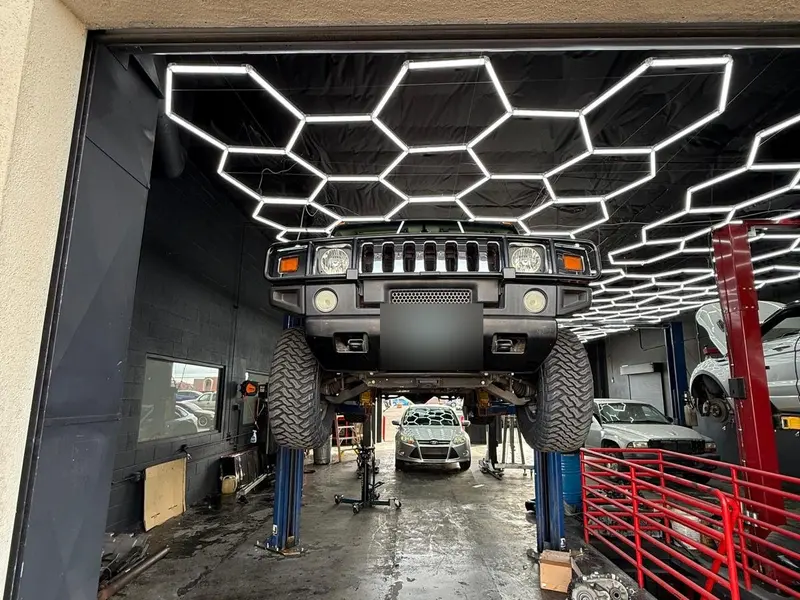
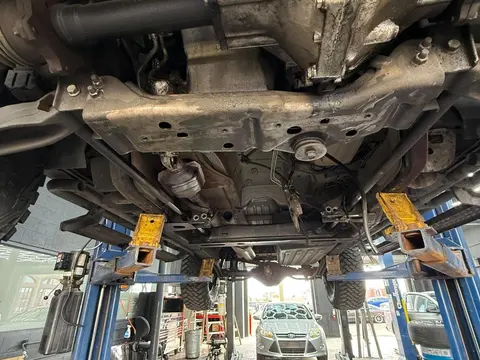
A Hummer H3 at our shop at 3560 E Tropicana Ave in Las Vegas, in for differential rebuild. Here is what the customer told us, what we found and what we did.
Customer Concern
The H3's differential needed repair.
Diagnosis
We inspected it to decide on the right repair. Its condition called for a rebuild.
Repair Performed
Differential rebuilt.
About This Repair
A differential rebuild replaces the worn internal parts, typically bearings, seals and sometimes gears, rather than swapping in a whole new unit. When the housing and main components are sound, a rebuild restores the differential and keeps the original assembly.
Signs a Hummer H3 Needs a Differential Rebuild
Differential problems usually show up gradually. One of the most common signs is a whine or howl that changes with vehicle speed, often getting louder when you accelerate or let off the gas. A clunk when shifting into drive or reverse, or when you get back on the throttle, can point to excessive play between the gears. Some owners notice a rumble or vibration that grows with speed, which can come from worn bearings. Fluid seeping around the axle seals or the differential cover is another clue, since low fluid speeds up wear on everything inside. On a capable truck like the H3, you might also notice grinding or binding during tight turns. If the gear oil looks dark or milky, or contains metal flakes when it is checked, the internal parts are likely wearing and should be inspected before the damage spreads.
What Causes Differential Wear on a Hummer H3
The differential lets the wheels on each side turn at different speeds through corners, and it handles a lot of torque doing it. Over time, the gear oil breaks down and loses its ability to protect the bearings and gear teeth. Leaking seals let that oil escape and can let dirt or water in, which is especially common after off-road driving or crossing deep water. Towing, carrying heavy loads and frequent aggressive launches put extra stress on the ring and pinion. Desert heat in Las Vegas can also play a role, since high temperatures thin the lubricant and make it work harder, particularly on long highway drives or summer trail runs. Larger tires, if fitted, change the load on the gears as well. Most failures come from a combination of these factors acting slowly over many miles of driving.
What to Do When You Notice Differential Trouble in Your H3
If you hear new noises from the front or rear of your H3, or spot gear oil under the truck, it is wise to have it looked at soon rather than waiting. Continuing to drive on a failing differential can turn a bearing or seal problem into damaged gears or a cracked housing, which may mean replacing the whole unit instead of rebuilding it. In the meantime, avoid towing, heavy loads and off-road use, and drive gently. You can check for drips where you park and note when the noise happens, such as during acceleration, coasting or turning. Those details help a technician narrow things down. Bring it in so the cause can be diagnosed, since noises from wheel bearings, the transfer case or tires can sometimes sound a lot like differential trouble.