

A Jeep Cherokee at our shop at 3560 E Tropicana Ave in Las Vegas, in for bad pulley diagnosis. Here is what the customer told us, what we found and what we did.
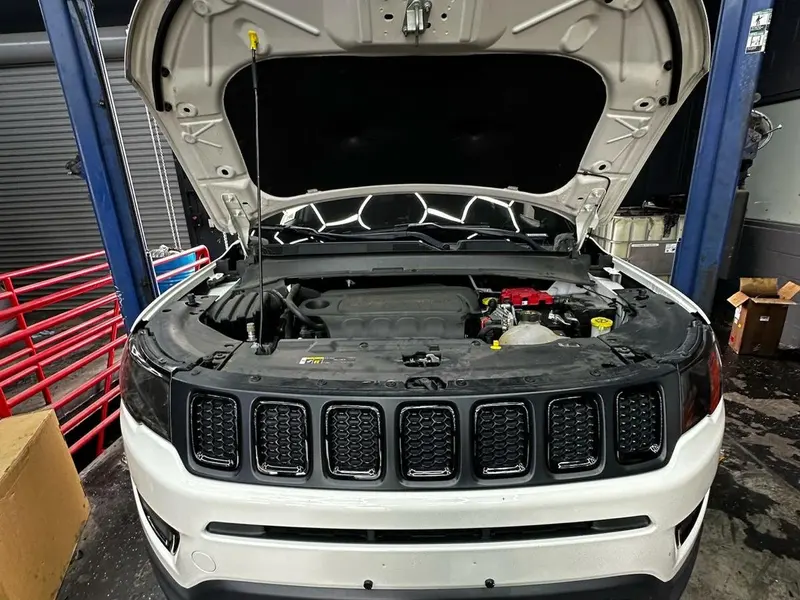
Customer Concern
The Jeep had a bad pulley.
Diagnosis
We inspected the belt drive to find which pulley had failed.
About This Repair
Pulleys guide and tension the belt that drives the alternator, A/C compressor and other accessories. A worn pulley bearing can squeal, wobble or let the belt slip, and if it seizes it can take the belt with it. Finding the bad one early protects everything on that belt.
Signs a Jeep Cherokee Has a Bad Pulley
The most common early clue is noise from the front of the engine. A failing idler or tensioner pulley bearing often starts with a chirp or squeal at startup, then turns into a steady whine, growl or rattle that changes with engine speed. Some owners notice the sound gets louder when the A/C is turned on or the steering wheel is turned, since those add load to the belt. With the hood open, a bad pulley may visibly wobble, or the belt may flutter instead of running smooth and straight. You might also see shiny glazing, fraying or uneven wear on the belt edges, or dark dust collecting around one pulley. If the belt starts slipping, the battery light can flicker, the A/C may blow warmer, and on some setups the engine can run hotter than normal.
What Causes Pulley Failure on a Jeep Cherokee
Most pulleys on a Jeep Cherokee ride on sealed bearings packed with grease, and that grease slowly breaks down over time. Once it dries out or escapes past the seal, the bearing begins to wear, get noisy and develop play. Heat speeds up that process, and the long, hot summers in Las Vegas put extra stress on everything under the hood. Dust and grit from desert driving can also work past seals and scuff pulley surfaces. A tensioner can lose spring force as it ages, which lets the belt run loose and slap against the pulleys. Fluid leaks matter too, because oil or coolant dripping onto the belt drive can degrade bearings and cause slipping. Finally, a misaligned belt or a pulley with a cracked or chipped face can wear quickly and put uneven load on neighboring parts.
What to Do When You Notice Pulley Noise on Your Jeep
When you first hear a new squeal, chirp or grinding from the front of the engine, it is worth paying attention rather than turning up the radio. Pulley noise rarely fixes itself, and a bearing that is noisy today can seize with little warning. If that happens, the belt may shred or come off, and you could lose charging, A/C and, depending on the setup, cooling or power steering assist all at once. Avoid spraying belt dressing or lubricant on a noisy belt, since it can mask the real problem and attract dirt. Keep an eye on warning lights and the temperature gauge, and if the belt looks frayed or the noise turns into a loud grind, limit driving. The best next step is to bring it in so the cause can be diagnosed, because a squeal can come from the belt, tensioner, idler or an accessory itself.