

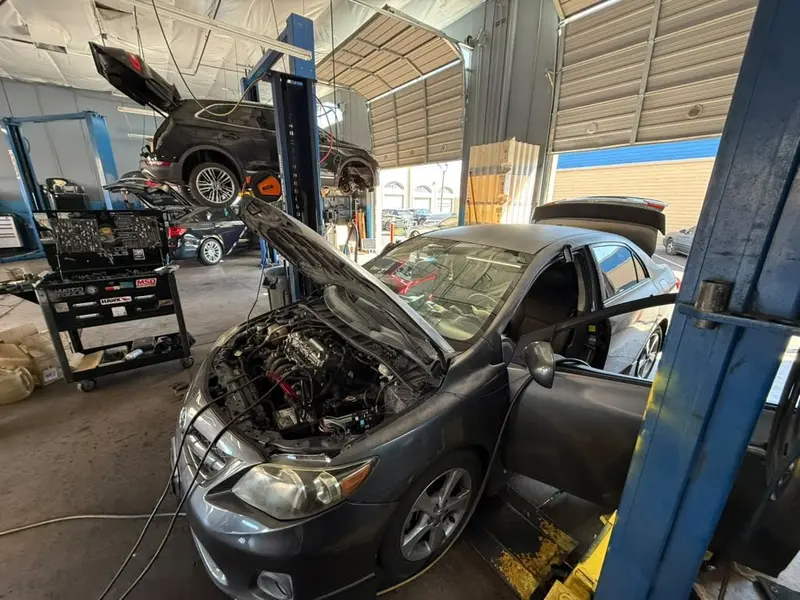
A Toyota Corolla at our shop at 3560 E Tropicana Ave in Las Vegas, in for electrical short and steering sensor diagnosis. Here is what the customer told us, what we found and what we did.
Customer Concern
The Corolla had an electrical short and a steering sensor problem.
Repair Performed
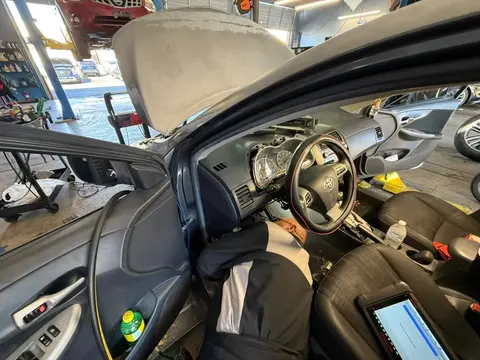
We removed the dashboard to reach and test the wiring and components behind it.
About This Repair
Many wiring harnesses, connectors, modules and steering-related sensors sit behind the dashboard, out of reach with the dash in place. Taking it out is a big step, but it is often the only way to trace a short to its source rather than guessing at parts.
Signs a Toyota Corolla Has an Electrical Short or Steering Sensor Problem
An electrical short often shows up in ways that seem unrelated at first. You might notice a fuse that keeps blowing, gauges or dash lights that flicker, accessories that stop working and then come back, or a battery that goes dead after the car sits overnight. Some owners notice a faint burning smell or warmth near the dash. A steering sensor problem tends to show itself through warning lights on the instrument cluster, such as the stability control, traction control or power steering indicators. The steering may feel heavier than usual, or the assist may come and go. Stability control may also step in at odd moments because the system is getting a bad reading of where the wheel is pointed. When both kinds of symptoms appear together in a Corolla, there is a good chance they share a common wiring path behind the dashboard.
What Causes Electrical Shorts and Steering Sensor Faults in a Corolla
Wiring insulation can wear through where a harness rubs against a metal bracket or sharp edge, letting a bare conductor touch ground. Connectors can loosen, corrode or develop poor contact over time, which creates intermittent faults that are hard to pin down. Aftermarket installs, such as stereos, remote starters or dash cameras, sometimes tap into factory wiring in ways that cause trouble later. Moisture from a leaking windshield seal or a clogged cowl drain can also find its way to connectors under the dash. In Las Vegas, desert heat adds another layer, since high cabin temperatures can make plastic connectors brittle and speed up insulation breakdown. Steering angle sensors and the clock spring in the steering column rely on clean signals and steady power, so a short or weak connection nearby can trigger sensor faults even when the sensor itself is fine.
What to Do When You Notice Electrical or Steering Warning Signs in Your Corolla
Start by paying attention to when the problem happens. Note whether it shows up over bumps, while turning the wheel, in hot weather or right after starting the car. These details help a technician narrow down the cause much faster. Avoid installing a bigger fuse, since a fuse that keeps blowing is protecting the wiring from damage, and a larger one can let wires overheat. If you smell burning, see smoke or the steering assist drops out, stop driving and have the car checked before going any farther. A proper diagnosis usually involves scanning for stored codes, checking power and ground circuits, and testing harness sections one at a time. Sometimes that means removing trim panels or the full dashboard to reach the wiring. If your Corolla is showing these signs, bring it in so the cause can be diagnosed rather than guessed at.