3560 E Tropicana Ave #800, Las Vegas, NV 89121, United States
+1 702-444-4468
info@unitedautocarecenter.com

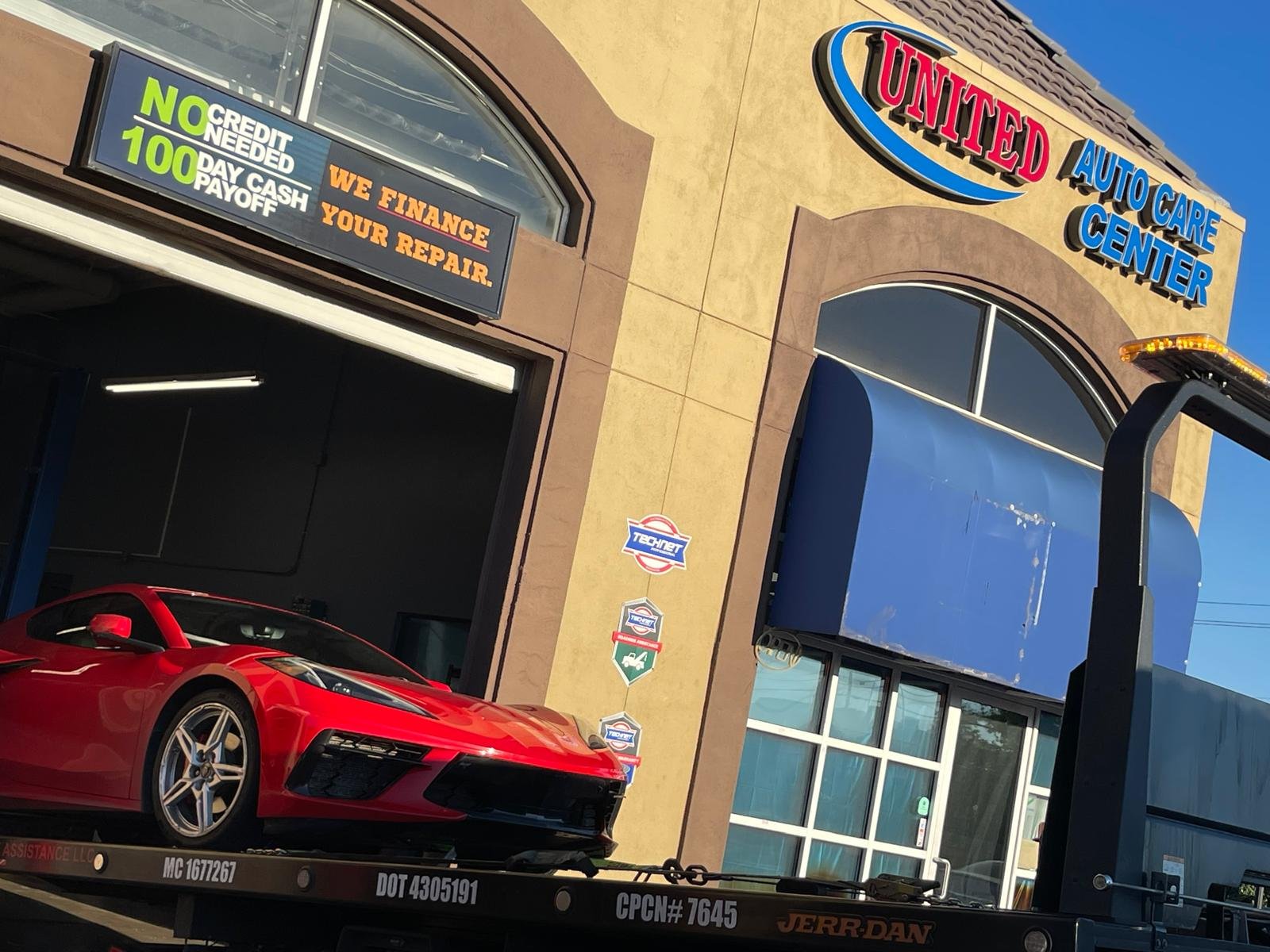
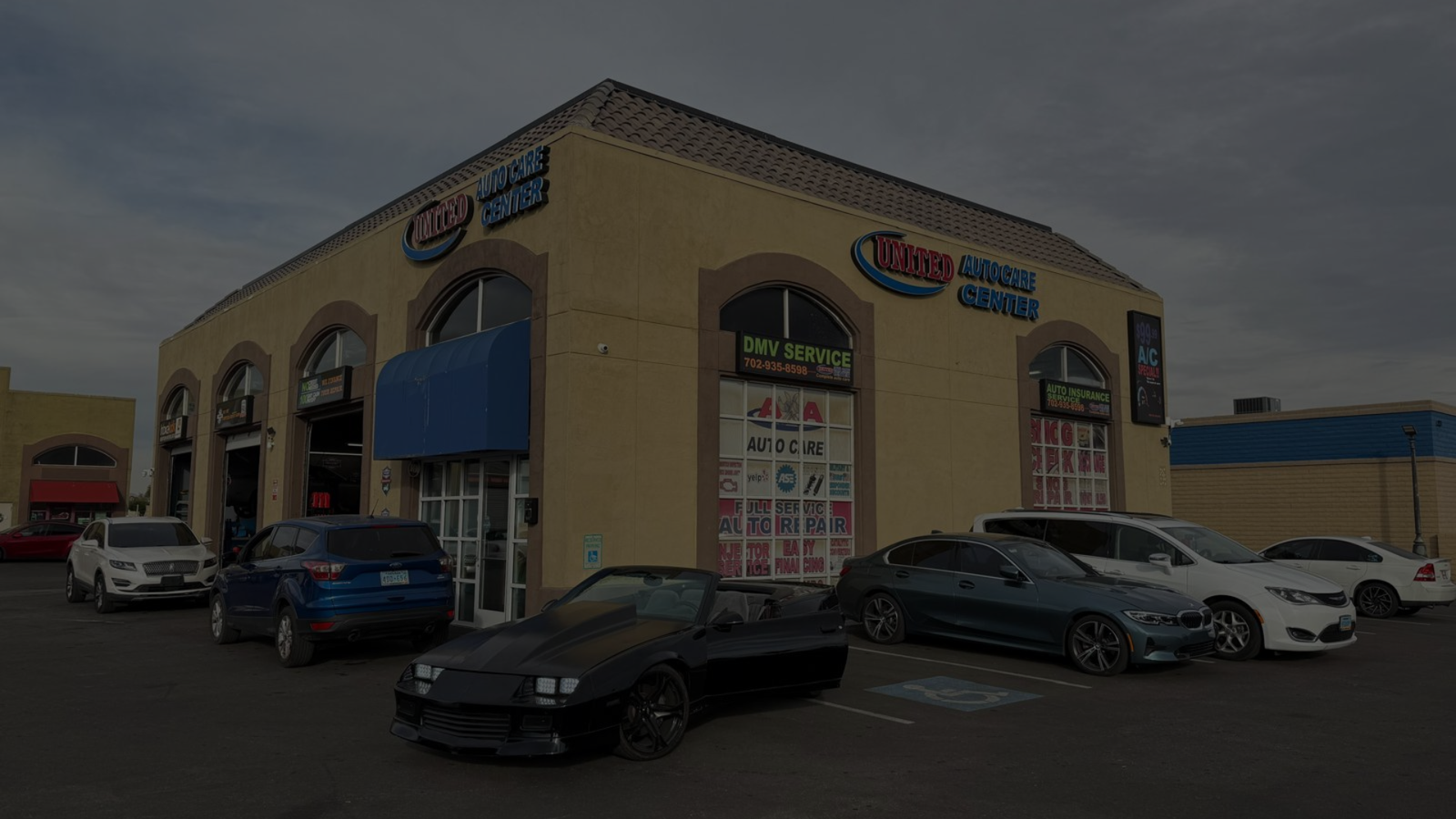
United Auto Care Center is Las Vegas’s trusted specialist for expert engine and transmission repair, high-performance AC service, and advanced ECU/PCM car programming. Since 2017, our ASE Certified technicians have provided dealership-level expertise with the honesty and fair pricing of a local shop.
-
3560 E Tropicana Ave #800, Las Vegas, NV 89121, United States
Adress
-
+1 702-444-4468
Phone
-
info@unitedautocarecenter.com
Mail
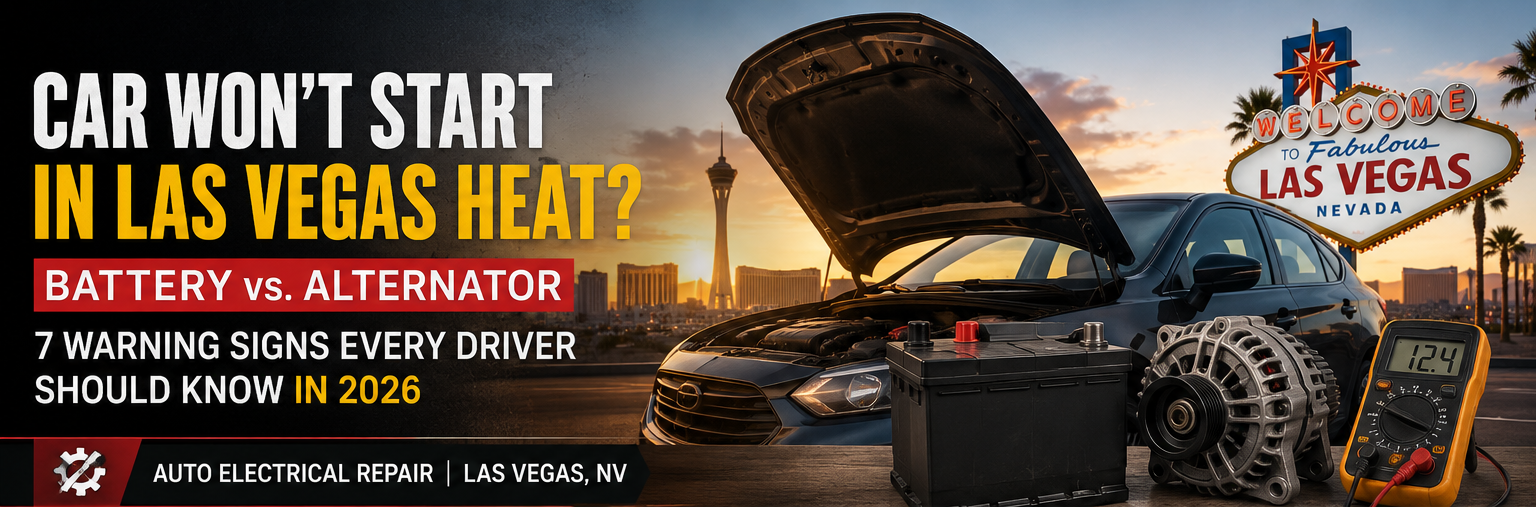
Car Won’t Start in Las Vegas Heat? Battery vs. Alternator: 7 Warning Signs Every Driver Should Know in 2026
United Auto Care Center — Trusted Auto Repair in Las Vegas Since 2017
When your car refuses to start in Las Vegas, the battery is often the first thing people blame. But a dead battery is not always the real problem.
A weak alternator, damaged wiring, poor electrical connections, starter problems, or another charging-system fault can create very similar symptoms.
That distinction matters even more in Las Vegas, where vehicles operate through extreme desert heat and heavy daily driving. Preliminary August 2026 climate data from the National Weather Service shows how severe conditions have been: Las Vegas recorded a high of 115°F on August 1, while the preliminary monthly average was 101.8°F.
For Las Vegas drivers, knowing the difference between a battery problem and an alternator or electrical problem can help prevent repeated battery replacements and unexpected breakdowns.
Why Las Vegas Heat Is Hard on Your Vehicle's Electrical System
Modern cars depend on much more than a simple battery.
Your vehicle's electrical system can include the battery, alternator, starter, wiring harnesses, fuses, sensors, electronic control modules, and numerous computer-controlled components.
United Auto Care Center notes that extreme heat can accelerate electrical wear, including deterioration of wiring insulation, sensors, and electrical connections. Electrical problems may show up as intermittent starting problems, warning lights, battery drain, or electronic malfunctions.
When temperatures remain extremely high, a problem that might have stayed intermittent can become a complete no-start condition.
Battery or Alternator? They Do Different Jobs
The battery provides the electrical power needed to start the vehicle and supports electrical systems when the engine is off.
The alternator takes over once the engine is running. It produces electrical power and helps maintain the battery's charge while supporting the vehicle's electrical demands.
That means replacing a battery does not necessarily solve the underlying problem.
For example, if the alternator is not charging correctly, a new battery can eventually become discharged again.
This is why proper electrical diagnostics should come before replacing expensive components based only on symptoms.
7 Warning Signs of an Electrical or Charging-System Problem
1. Your Car Struggles to Start
If the engine turns slowly, clicks repeatedly, or takes longer than normal to start, the battery may be weak.
However, the same symptom can also be caused by the starter, charging system, cables, or electrical connections.
A proper starting and charging-system test can help identify the actual cause.
2. You Keep Needing a Jump Start
One jump start does not automatically mean the battery needs replacement.
If your vehicle repeatedly needs a jump after being driven, the problem may involve:
* A weak battery
* An alternator that is not charging correctly
* Parasitic electrical drain
* Corroded or damaged connections
* A wiring problem
Repeatedly jumping the vehicle without finding the cause can leave you stranded again.
3. Your Battery Warning Light Comes On
A battery-shaped warning light does not always mean "replace the battery."It can indicate a charging-system problem.
A failing alternator, damaged belt, wiring issue, or charging-system fault can cause the warning light to appear.
Do not ignore it simply because the engine is still running.
4. Headlights or Interior Lights Flicker
Flickering lights can be a warning that electrical voltage is not remaining stable.
If you notice headlights becoming unusually dim, dashboard lights flickering, or electronic systems behaving strangely, have the charging system inspected.
5. Multiple Warning Lights Appear at Once
Modern vehicles are interconnected.
A voltage problem can sometimes trigger multiple warning lights or create strange electronic behavior.
One electrical fault can therefore look like several unrelated mechanical problems.
This is one reason computer diagnostics and system testing are important before replacing components.
6. Your Car's Electronics Act Strangely
Have you noticed windows, locks, dashboard electronics, infotainment systems, or other electrical functions acting inconsistently?
Intermittent electrical faults can be difficult to locate without systematic testing.
A problem that appears and disappears does not mean it is harmless.
7. Your Vehicle Overcharged or Damaged Electrical Components
Overcharging can be especially serious because excessive voltage can damage components beyond the battery.
A recent United Auto Care Center repair case involved a 2016 Jeep Grand Cherokee Limited with an overheated wiring harness and alternator overcharging. The repair included the battery cable, fuse box, battery terminal fuse, and alternator.
This type of failure demonstrates why diagnosing the electrical system as a whole is important rather than simply installing another battery.
Why Replacing the Battery May Not Fix the Problem
Imagine a vehicle has a weak alternator.
The battery becomes discharged.
The owner replaces the battery.
The car starts normally for a short time.
Then the charging problem remains.
Eventually, the new battery becomes discharged again.
The owner may think they received a "bad battery," when the real problem was the charging system.
That is why testing the complete electrical system can save time and prevent unnecessary parts replacement.
What Should You Do When Your Car Won't Start in Las Vegas?
First, avoid repeatedly attempting to start the vehicle if you notice unusual electrical symptoms, burning smells, smoke, or obvious wiring damage.
Then ask for a complete starting and charging-system diagnosis.A professional inspection may include:
* Battery testing
* Alternator output testing
* Starter testing
* Cable and terminal inspection
* Fuse and relay inspection
* Wiring inspection
* Computer diagnostics
* Charging-system evaluation
The goal is not simply to find the part that appears to have failed.
The goal is to identify why the failure happened.
When Should You Visit an Auto Repair Shop in Las Vegas?
You should arrange an inspection when you notice:
* Repeated no-start situations
* Frequent jump starts
* Battery warning lights
* Flickering headlights
* Electrical components working intermittently
* Multiple dashboard warning lights
* Burning electrical smells
* Visible corrosion or damaged wiring
* A battery that repeatedly goes dead
A flashing or severe electrical warning combined with smoke, burning odors, or loss of vehicle function should be treated as an urgent safety issue.
Frequently Asked Questions
A no-start condition can be caused by a weak battery, alternator or charging-system problem, starter failure, damaged wiring, poor electrical connections, or another mechanical or electrical issue. Proper testing is needed to identify the cause.
A battery problem commonly causes slow cranking or a no-start condition. An alternator problem can cause repeated battery drain, a battery warning light, flickering lights, or electrical problems while the engine is running. However, the symptoms can overlap, so testing both systems is recommended.
Extreme heat can accelerate battery aging and place additional stress on vehicle electrical components. Las Vegas's extreme summer conditions make regular battery and charging-system inspections especially useful.
Possible causes include a failing battery, alternator problems, parasitic electrical drain, poor battery connections, damaged wiring, or another electrical fault.
United Auto Care Center provides auto electrical diagnostics and repair in Las Vegas, including battery, alternator, starter, wiring, and electrical-system troubleshooting.
A car that will not start is not automatically a battery problem.In Las Vegas, extreme heat can put additional stress on electrical components, while daily driving, traffic, and vehicle age can contribute to wear.Before replacing the battery again, have the battery, alternator, starter, cables, wiring, and charging system properly tested.The right diagnosis can mean the difference between fixing the real problem and repeating the same repair.
United Auto Care Center — Trusted transmission repair in Las Vegas since 2017. Certified technicians, advanced diagnostics, and a 12-month/12,000-mile warranty on most repairs.
📍 Serving Las Vegas and surrounding areas
📞 (702) 444-4468 |
✉️ info@unitedautocarecenter.com
🕐 Mon – Sat: 8:00 AM – 6:00 PM