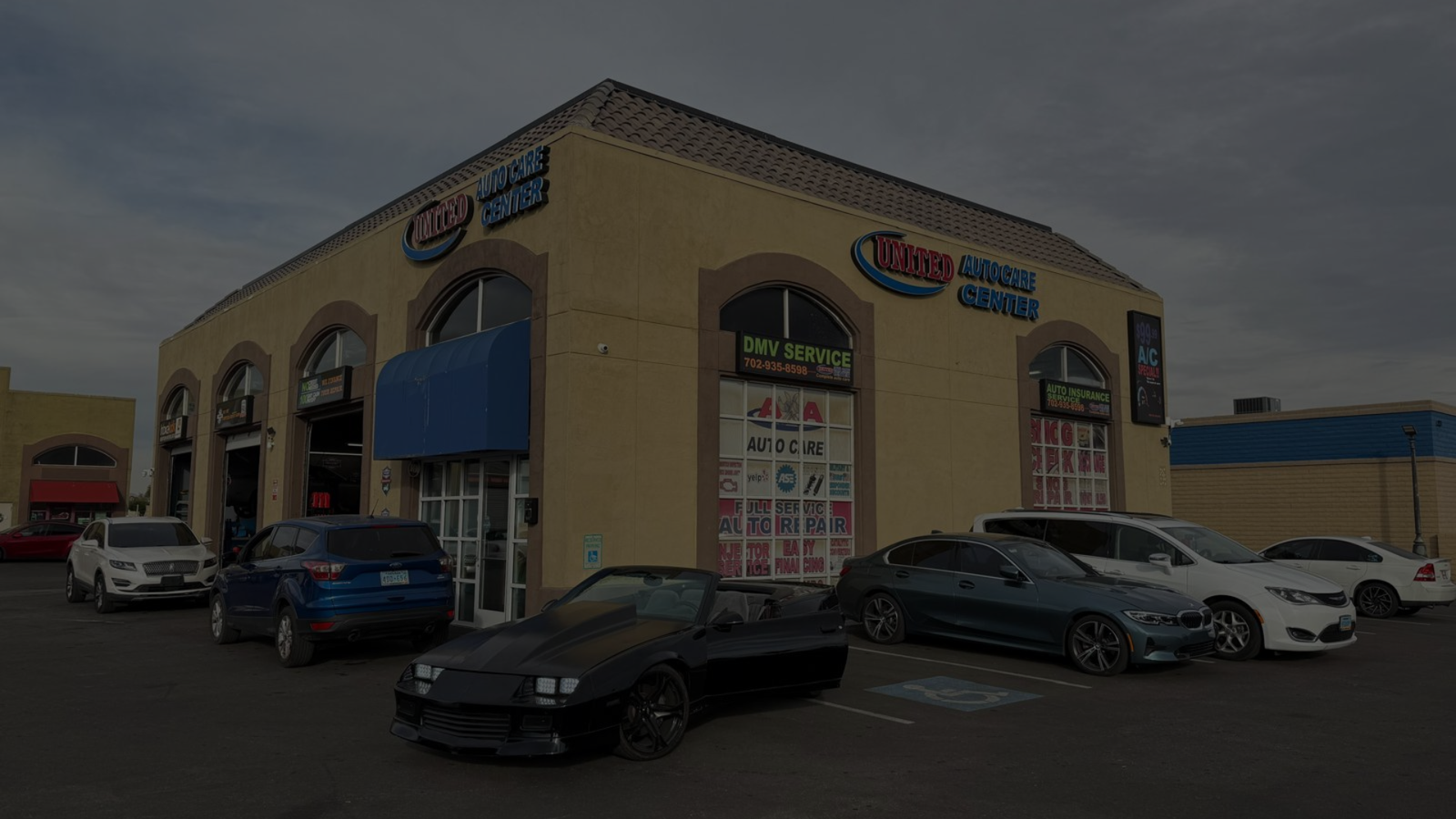
3560 E Tropicana Ave #800, Las Vegas, NV 89121, United States
+1 702-444-4468
info@unitedautocarecenter.com

United Auto Care Center is Las Vegas’s trusted specialist for expert engine and transmission repair, high-performance AC service, and advanced ECU/PCM car programming. Since 2017, our ASE Certified technicians have provided dealership-level expertise with the honesty and fair pricing of a local shop.
-
3560 E Tropicana Ave #800, Las Vegas, NV 89121, United States
Adress
-
+1 702-444-4468
Phone
-
info@unitedautocarecenter.com
Mail
Should I Take My Car to a Dealership or Independent Shop?
United Auto Care Center — Trusted Auto Repair in Las Vegas Since 2017
When your car needs maintenance, diagnostics, or repairs, you may face a common question:
Should I take my car to the dealership or an independent auto repair shop?
Both options can provide professional automotive service, but they may differ in pricing, specialization, parts options, convenience, equipment, and the overall customer experience.
The right choice depends on your vehicle, the repair it needs, warranty considerations, and what matters most to you as a customer.
If you're comparing a dealership vs. an independent auto repair shop in Las Vegas, here's what you should know before making your decision.
Dealership vs. Independent Auto Repair Shop: Quick Comparison
| Factor | Dealership | Independent Repair Shop |
|---|---|---|
| Brand specialization | Usually specializes in specific manufacturer brands | May service multiple makes and models |
| Parts | Often emphasizes OEM parts | May offer OEM and aftermarket options |
| Warranty/recall work | Often appropriate for manufacturer warranty and recall work | Typically focused on customer-paid maintenance and repairs |
| Diagnostic equipment | Manufacturer-specific equipment may be available | Professional multi-brand and specialized diagnostic tools may be available |
| Pricing | Can vary and may be higher for some services | Can vary and may offer different pricing structures |
| Technician experience | Often focused on vehicles from specific manufacturers | May have broad experience across multiple brands |
| Customer relationship | Larger service operation | Often more direct communication |
| Repair options | Often follows manufacturer procedures and parts programs | May provide multiple appropriate repair or parts options |
| Convenience | Depends on dealership location and scheduling | Depends on the individual local shop |
Neither option is automatically right for every repair.
The important question is:
Which shop is best equipped to handle your specific vehicle problem?
When Does Taking Your Car to a Dealership Make Sense?
There are situations where a dealership may be a practical choice.
1. Your Vehicle Has an Open Recall
If your vehicle is affected by a manufacturer safety recall, an authorized dealership for that brand is generally the appropriate place to have the recall remedy performed.
Before paying another shop to address a problem, it can be useful to check whether your vehicle has an applicable open recall.
2. The Repair May Be Covered by a Manufacturer Warranty
If your vehicle is still covered by a manufacturer warranty and the specific problem may qualify for warranty coverage, contact an authorized dealership before approving customer-paid repairs elsewhere.
Coverage depends on the warranty terms, vehicle, repair, and circumstances.
3. The Problem Requires Manufacturer-Specific Procedures
Some newer or complex vehicle systems may require manufacturer-specific diagnostic procedures, programming, equipment, or information.
Dealership technicians frequently work on vehicles from the same manufacturer, which can provide familiarity with brand-specific systems.
4. Your Vehicle Requires Certain Software or Programming Services
Modern vehicles contain numerous electronic control modules.
Some repairs may require programming, software updates, initialization, calibration, or manufacturer-specific procedures.
Depending on the vehicle and repair, a dealership may be one option for this type of service.
Qualified independent facilities may also have access to advanced diagnostic and programming capabilities, so ask the shop what it can perform before scheduling the repair.
Why Do Drivers Choose Independent Auto Repair Shops?
Independent repair shops can be a practical option for many maintenance and repair needs.
Here are some of the reasons drivers consider them.
1. Potentially Different Repair Costs
Price is one of the most common reasons customers compare independent shops with dealerships.
Labor rates, parts options, and shop pricing structures can differ between facilities.
An independent shop may sometimes provide a lower estimate, but price should not be considered in isolation.
Compare:
Parts
Labor
Diagnostic charges
Warranty coverage
Scope of work
Recommended repairs
A lower estimate is only useful if you understand what is included.
2. More Parts Options May Be Available
Dealerships frequently use OEM — Original Equipment Manufacturer — parts.
Independent shops may have access to different options depending on the repair, including:
OEM parts
Aftermarket parts
Remanufactured components
Rebuilt components
Having alternatives can provide more flexibility when balancing price, availability, and warranty.
Ask your technician which option is appropriate for your vehicle and why.
3. Independent Shops Can Service Multiple Vehicle Brands
A household may have several vehicles from different manufacturers.
A qualified independent auto repair shop may be able to service multiple makes and models in one location.
This can make it easier to establish a long-term relationship with one local repair facility.
4. You May Communicate More Directly With the Repair Team
Independent shops often operate with smaller teams.
Depending on the business, this may allow customers to communicate more directly with the people diagnosing or managing the repair.
Good communication can make it easier to understand:
What is wrong with the vehicle?
What repair is being recommended?
How much is it expected to cost?
What needs attention now?
What may be addressed later?
5. Independent Shops Can Handle Many Common Repairs
A qualified independent repair shop may handle a wide range of automotive services.
Depending on its equipment and technician experience, services may include:
Engine diagnostics
Engine repair
Transmission diagnostics and repair
Brake service
Suspension repair
Electrical diagnostics
Battery and charging-system service
Check engine light diagnostics
Automotive A/C repair
Oil and maintenance services
For many common vehicle problems, a dealership is not necessarily the only repair option.
Is a Dealership Mechanic More Qualified?
Not automatically.
Dealership technicians may receive manufacturer-specific training and work frequently on vehicles from that manufacturer.
Independent technicians may have extensive experience across multiple manufacturers and may also hold professional certifications.
When evaluating technician qualifications, consider:
Training
Certifications
Years of experience
Experience with your vehicle
Experience with your specific repair
Diagnostic equipment
Access to technical information
The name on the building does not tell you everything about the individual technician working on your vehicle.
Does Going to an Independent Shop Automatically Void Your Warranty?
Simply having routine maintenance or service performed outside a dealership does not, by itself, mean that a vehicle's entire manufacturer warranty automatically disappears.
However, warranty situations can be specific.
You should follow the manufacturer's required maintenance specifications, use appropriate parts and fluids, keep service documentation, and review the terms of your particular warranty.
If you believe a repair should be covered under your manufacturer warranty, contact the manufacturer or an authorized dealership before authorizing customer-paid repair work.
Are Dealership Parts Better Than Independent Shop Parts?
It depends on what parts are being compared.
OEM Parts
OEM parts are produced for the vehicle manufacturer and are designed to meet the manufacturer's specifications.
Aftermarket Parts
Aftermarket components are produced by other manufacturers.
Quality can vary significantly depending on the brand and component.
Remanufactured or Rebuilt Components
Certain automotive components may also be available as professionally remanufactured or rebuilt units.
Rather than assuming one category is always better, ask:
What part are you recommending?
Who manufactures it?
Why are you recommending it?
What warranty applies?
Is an Independent Auto Repair Shop Always Cheaper Than a Dealership?
No.
Independent shops can sometimes have lower prices, but there is no universal rule.
Repair costs depend on factors such as:
Vehicle make and model
Type of repair
Required parts
Labor time
Diagnostic complexity
Technician expertise
Local labor rates
Instead of assuming one type of facility is cheaper, request an estimate and compare what you receive.
Should I Use the Dealership for a New Car?
If your vehicle is relatively new, first determine whether the issue may be covered by:
Manufacturer warranty
Extended coverage
A recall
A manufacturer service program
If coverage applies, contacting the appropriate dealership may make sense.
For maintenance and customer-paid repairs, you can still compare qualified service providers based on your vehicle's requirements and warranty terms.
What About an Older Vehicle?
As vehicles age and manufacturer warranty coverage expires, many owners begin considering independent repair facilities for ongoing maintenance and repairs.
An independent shop that knows the vehicle's service history can become a useful long-term resource.
The key is finding a facility with the appropriate experience, equipment, and diagnostic capabilities for your vehicle.
Dealership vs. Independent Shop for Major Repairs
If you are facing a major repair such as an engine or transmission problem, do not choose solely based on whether the facility is a dealership or independent shop.
Instead, ask both facilities:
1. What is the diagnosis?
2. How was the problem confirmed?
3. What exactly needs to be repaired?
4. What parts will be used?
5. What is included in the estimate?
6. What warranty applies?
7. How much experience do you have with this repair?
8. Are there alternative repair options?
For expensive non-emergency repairs, getting another professional opinion can also help you understand your options.
When Should You Choose a Dealership?
A dealership may make sense when:
* You have an applicable manufacturer recall
* A repair may be covered by the manufacturer warranty
* Manufacturer-specific programming is required
* You specifically want dealership service
* The repair requires capabilities available through that dealer
When Should You Consider an Independent Repair Shop?
A qualified independent shop may be worth considering when:
* Your repair is not covered by the manufacturer
* You need routine maintenance
* You need common mechanical repairs
* You want to discuss different parts options
* You want another estimate for a major repair
* You prefer working with a local repair facility
* You own vehicles from multiple manufacturers
How to Choose an Independent Auto Repair Shop in Las Vegas
If you decide to consider an independent auto repair shop in Las Vegas, evaluate the individual business rather than assuming all independent shops are the same.
Look for:
Experienced technicians
Clear diagnostic explanations
Written estimates
Appropriate diagnostic equipment
Transparent parts options
Customer reviews
Repair documentation
Warranty information
Clear communication
Most importantly, the shop should be able to explain what is wrong with your vehicle and why the recommended repair is necessary.
Independent Auto Repair in Las Vegas
United Auto Care Center provides automotive diagnostics, maintenance, and repair services for drivers in Las Vegas, Nevada.
Our services include engine repair, transmission repair, brake service, automotive A/C repair, check engine diagnostics, oil services, battery-related services, and other automotive repairs.
If your vehicle needs customer-paid repair work, you can discuss the problem, diagnosis, recommended repairs, and available options with our team before deciding how to proceed.
Visit United Auto Care Center to learn more about our auto repair services in Las Vegas.
Frequently Asked Questions
Neither option is automatically better for every situation. Dealerships can be particularly useful for applicable recalls, manufacturer warranty repairs, and certain manufacturer-specific services. Qualified independent shops can handle many maintenance, diagnostic, and repair needs.
Sometimes, but not always. Labor rates, parts, diagnostic charges, and repair procedures can differ. Compare detailed estimates rather than assuming one option will always cost less.
Using an independent facility does not automatically mean the entire manufacturer warranty disappears simply because maintenance or service was performed outside the dealership. However, you should follow manufacturer requirements, maintain records, and review your specific warranty terms.
An authorized dealership for the vehicle manufacturer is generally the appropriate place to have an applicable manufacturer recall remedy performed.
Many independent repair facilities service newer vehicles, but capabilities differ by shop. Ask whether the facility has the equipment, information, and experience required for your particular vehicle and repair.
Some independent shops can provide OEM parts as well as aftermarket, remanufactured, or rebuilt options depending on the repair. Ask what parts will be used before approving the work.
Both dealerships and qualified independent shops can service older vehicles. Compare technician experience, diagnostic capabilities, repair options, pricing, communication, and warranty coverage.
Final Takeaway
The decision between a dealership and an independent auto repair shop should depend on the specific situation.
A dealership may be particularly useful for manufacturer warranty work, recalls, and certain brand-specific services.
A qualified independent shop can be a practical option for diagnostics, maintenance, and many customer-paid repairs, while potentially providing different parts choices, pricing structures, and a more direct local-shop relationship.
Before deciding, compare the diagnosis, technician experience, parts, warranty, repair scope, and total estimate — not just the name on the building.