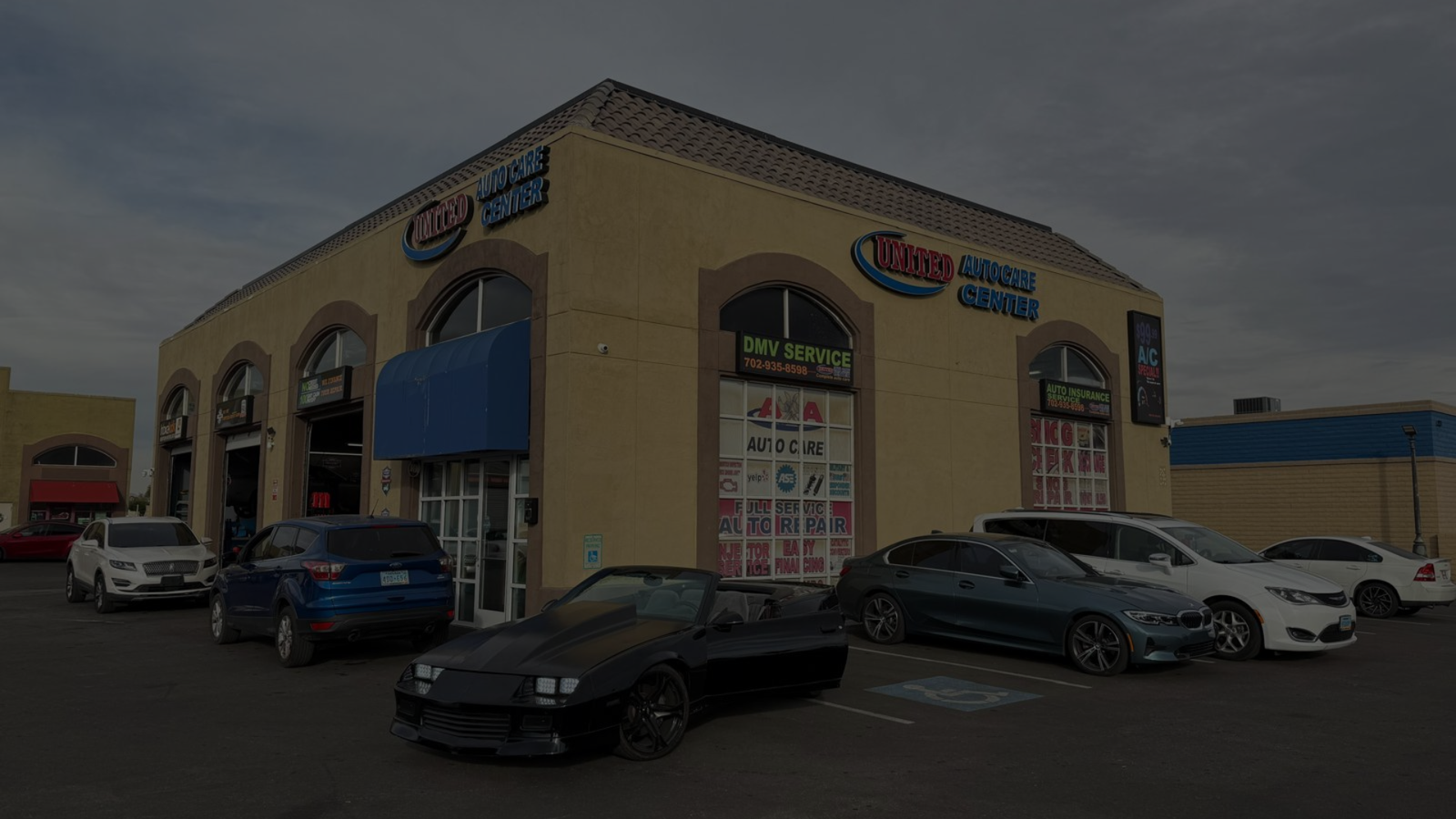
3560 E Tropicana Ave #800, Las Vegas, NV 89121, United States
+1 702-444-4468
info@unitedautocarecenter.com

United Auto Care Center is Las Vegas’s trusted specialist for expert engine and transmission repair, high-performance AC service, and advanced ECU/PCM car programming. Since 2017, our ASE Certified technicians have provided dealership-level expertise with the honesty and fair pricing of a local shop.
-
3560 E Tropicana Ave #800, Las Vegas, NV 89121, United States
Adress
-
+1 702-444-4468
Phone
-
info@unitedautocarecenter.com
Mail
What Does a Master Automotive Technician Do?
United Auto Care Center — Trusted Auto Repair in Las Vegas Since 2017
When you take your vehicle to an auto repair shop, you may hear terms such as mechanic, automotive technician, certified technician, or Master Automotive Technician.
But what does “Master Automotive Technician” actually mean?
In general, an experienced automotive technician does much more than simply replace damaged parts. Technicians diagnose complex vehicle problems, interpret diagnostic information, test mechanical and electrical systems, perform repairs, and verify that the vehicle is operating correctly.
For drivers looking for an auto repair shop in Las Vegas, understanding technician qualifications can help you ask better questions and make a more informed decision about who works on your vehicle.
What Is a Master Automotive Technician?
The term Master Automotive Technician is commonly associated with a technician who has demonstrated advanced knowledge across multiple areas of automotive repair and diagnosis.
In the United States, one of the best-known industry credentials is the ASE Master Automobile Technician designation.
ASE, the National Institute for Automotive Service Excellence, offers certification tests covering major automotive systems.
Technicians who meet ASE's applicable requirements across the required automobile testing areas can earn Master Automobile Technician status.
However, certification is only one part of technician qualification.
Practical experience, ongoing training, diagnostic ability, familiarity with modern vehicle technology, and the ability to correctly perform repairs are also important.
What Does a Master Automotive Technician Do?
A highly experienced automotive technician may work across several vehicle systems rather than focusing on only one type of repair.
Their responsibilities can include:
Diagnosing mechanical problems
Diagnosing electrical problems
Interpreting diagnostic trouble codes
Testing vehicle systems and components
Performing engine repairs
Diagnosing transmission concerns
Servicing brake systems
Inspecting steering and suspension systems
Diagnosing heating and air-conditioning problems
Evaluating drivability concerns
Using scan tools and diagnostic equipment
Reviewing manufacturer service information
Performing maintenance
Verifying repairs after work is completed
The exact work depends on the technician's qualifications, the repair facility, and the vehicle being serviced.
1. Diagnosing Vehicle Problems
One of the most important responsibilities of an experienced automotive technician is diagnosis.
A customer may arrive saying:
“My car is shaking.”
But shaking can have many possible causes.
The technician's job is to determine why the vehicle is shaking before recommending a repair.
Diagnosis may involve:
Talking with the customer about symptoms
Performing a visual inspection
Scanning vehicle computers
Checking diagnostic trouble codes
Testing individual components
Inspecting mechanical systems
Reviewing live vehicle data
Performing electrical testing
Road testing the vehicle when appropriate
Good diagnosis helps reduce unnecessary parts replacement.
2. Using Automotive Diagnostic Equipment
Modern vehicles contain numerous computers, sensors, electronic modules, and electronically controlled systems.
Because of this, today's automotive technician often works with sophisticated diagnostic equipment.
Depending on the vehicle and problem, tools may include:
Professional scan tools
Digital multimeters
Battery and charging-system testers
Pressure testing equipment
Electrical testing equipment
Specialized mechanical tools
Manufacturer service information
A scan tool can provide valuable information, but it does not automatically tell a technician exactly which part should be replaced.
The technician still needs to interpret the information and perform appropriate testing.
3. Diagnosing Check Engine Lights
A check engine light can appear for many different reasons.
When a technician connects a diagnostic scanner, the vehicle may provide one or more diagnostic trouble codes.
Those codes help identify the system where a problem has been detected.
However:
A trouble code is not always a final diagnosis.
An experienced technician may need to examine sensor readings, wiring, related components, mechanical conditions, and other information before identifying the actual cause.
That is one reason diagnostic knowledge is so important in modern auto repair.
4. Performing Engine Repairs
Engine problems can range from relatively simple component failures to complex internal mechanical issues.
An experienced automotive technician may diagnose and repair issues involving:
Engine performance
Cooling systems
Ignition systems
Fuel delivery
Sensors
Timing-related components
Oil leaks
Overheating
Internal engine components
Complex engine work requires understanding how multiple systems interact.
A symptom that appears to be an engine problem may sometimes originate in an electrical, fuel, cooling, or control system.
5. Diagnosing Transmission Problems
Transmission concerns can also require advanced diagnostic skills.
Drivers may report symptoms such as:
Delayed engagement
Rough shifting
Slipping
Unusual noises
Fluid leaks
Warning lights
Changes in vehicle performance
A technician may inspect fluid condition, scan vehicle systems, evaluate trouble codes, perform tests, and determine whether the problem involves the transmission itself or another related system.
Proper diagnosis is particularly important before recommending major transmission repairs.
6. Working With Electrical and Electronic Systems
Vehicles have become increasingly dependent on electronics.
A modern technician may diagnose problems involving:
Batteries
Alternators
Starters
Sensors
Wiring
Fuses
Relays
Control modules
Charging systems
Starting systems
Power accessories
Electrical diagnosis often requires systematic testing rather than simply replacing components.
A technician needs to understand circuits, voltage, resistance, signals, and communication between vehicle systems.
7. Inspecting Brake, Steering, and Suspension Systems
Technicians also work with systems that directly affect how a vehicle stops and handles.
Inspections may involve components such as:
Brake System
Brake pads
Rotors
Calipers
Hydraulic components
Brake fluid
Electronic brake-related systems
Steering and Suspension
Shocks and struts
Control arms
Bushings
Steering components
Wheel-related suspension components
The technician's role is to identify worn or damaged components and explain what repairs may be required.
8. Diagnosing Automotive A/C Problems
In Las Vegas, a properly functioning automotive air-conditioning system can be particularly important during hot weather.
A/C problems may involve more than simply adding refrigerant.
A technician may need to evaluate:
Refrigerant pressures
Compressor operation
Electrical controls
Sensors
Leaks
Condenser performance
Cooling fans
Related HVAC components
Proper testing helps determine why the system is not cooling correctly before repairs are recommended.
9. Reading Technical Service Information
Modern automotive repair requires access to accurate technical information.
Technicians may consult service information for:
Repair procedures
Wiring diagrams
Component locations
Technical specifications
Diagnostic procedures
Torque specifications
Manufacturer information
This becomes increasingly important as vehicles become more technologically complex.
10. Verifying the Repair
The job should not necessarily end when a new part is installed.
Depending on the repair, a technician may need to verify that the original problem has actually been corrected.
Verification may involve:
Rechecking diagnostic data
Clearing and rechecking trouble codes
Testing repaired systems
Inspecting for leaks
Confirming proper operation
Performing a road test when appropriate
The goal is to determine whether the repair addressed the original concern.
Mechanic vs. Automotive Technician: What's the Difference?
The terms are often used interchangeably, but “automotive technician” commonly reflects the increasingly technical nature of modern vehicle repair.
| Mechanic / Technician Work | Advanced Technician Work |
|---|---|
| Routine maintenance | Complex diagnostics |
| Component replacement | Electrical troubleshooting |
| Mechanical repair | Scan-tool data interpretation |
| Brake service | Computer-controlled system diagnosis |
| Basic inspections | Multi-system troubleshooting |
| Maintenance services | Advanced drivability diagnosis |
This does not mean someone called a “mechanic” is less qualified.
Job titles alone do not determine skill.
Training, certifications, experience, diagnostic ability, and actual workmanship matter more than the title printed on a business card.
What Does ASE Master Technician Mean?
ASE stands for the National Institute for Automotive Service Excellence.
ASE provides professional certification testing for automotive service professionals.
The Master Automobile Technician credential is associated with passing the required ASE automobile certification tests in designated areas and meeting applicable ASE requirements.
Because certifications and requirements can change, customers who specifically want an ASE-certified technician should verify the technician's current certification status rather than assuming that terms such as “master mechanic” automatically mean ASE Master certified.
Why Technician Qualifications Matter
Modern vehicles combine mechanical systems with computers, sensors, modules, software, and complex electrical networks.
Replacing a part without identifying the underlying problem can become expensive.
Qualified technicians can help by following a diagnostic process before recommending repairs.
For customers, that can mean a clearer answer to three important questions:
What is wrong?
Why did it happen?
What needs to be repaired?
Questions to Ask About Technician Qualifications
If you are choosing an auto repair shop, you can ask:
1. What experience does the technician have with my type of repair?
2. Does the shop have technicians with professional certifications?
3. Is the technician experienced with my vehicle make and model?
4. What diagnostic equipment does the shop use?
5. How will the problem be diagnosed?
6. Will you explain the diagnostic results before repairs begin?
7. Does the shop provide a written estimate?
8. What warranty applies to the repair?
You do not need to interview the technician like a job applicant.
A few practical questions can help you understand the shop's capabilities.
Does a Master Technician Mean the Repair Will Cost More?
Not necessarily.
Repair pricing can depend on many factors, including:
Type of repair
Vehicle make and model
Parts required
Labor time
Diagnostic complexity
Shop labor rates
Additional services required
An experienced technician may also be valuable because effective diagnosis can help identify the actual cause of a problem before unnecessary components are replaced.
When comparing auto repair prices, consider the quality of the diagnosis and repair, not only the hourly rate.
How to Choose a Qualified Auto Technician in Las Vegas
When searching for an automotive technician in Las Vegas, look beyond advertising claims.
Consider:
Technician experience
Relevant certifications
Diagnostic capabilities
Communication
Written estimates
Customer reviews
Repair documentation
Warranty information
Experience with the type of repair your vehicle needs
Most importantly, the shop should be able to explain what it found and why a particular repair is being recommended.
Automotive Repair in Las Vegas
At United Auto Care Center, our team provides automotive diagnostic, maintenance, and repair services for drivers in Las Vegas.
Services include engine repair, transmission repair, brake service, automotive A/C repair, check engine diagnostics, oil services, battery-related services, and other vehicle repairs.
When your vehicle develops a problem, proper diagnosis is an important first step toward determining the appropriate repair.
Visit United Auto Care Center to learn more about our auto repair services in Las Vegas.
Frequently Asked Questions
A Master Automotive Technician may diagnose and repair multiple vehicle systems, including engines, transmissions, brakes, steering and suspension, electrical systems, HVAC systems, and computerized vehicle controls, depending on the technician's specific qualifications.
ASE is the National Institute for Automotive Service Excellence. Its Master Automobile Technician designation is earned by technicians who meet ASE's applicable requirements across the required automobile certification areas.
The title alone should not be used to judge an individual technician. Certifications, training, experience, diagnostic ability, and quality of work are more useful factors to consider.
Automotive technicians commonly diagnose check engine lights using scan tools, vehicle data, testing procedures, and inspections. A diagnostic trouble code can identify an affected system but may require additional testing to determine the underlying cause.
Many vehicle symptoms can have multiple possible causes. Proper diagnosis helps determine the underlying problem before repairs or parts replacement are recommended.
You can ask about ASE certification and other technician qualifications when choosing an auto repair facility. If a particular certification matters to you, verify that it is current.
Consider relevant experience, professional training or certifications, diagnostic capabilities, communication, estimates, documentation, and experience with the repair your vehicle needs.
Final Takeaway
A Master Automotive Technician does much more than replace parts.
Modern automotive repair requires a combination of mechanical knowledge, electrical troubleshooting, computer diagnostics, technical information, practical experience, and systematic problem-solving.
When choosing an auto repair shop, do not focus only on price.
Ask who will diagnose your vehicle, how the problem will be tested, and why the recommended repair is necessary.
The better you understand the technician's qualifications and diagnostic process, the better informed you can be when making decisions about your vehicle.