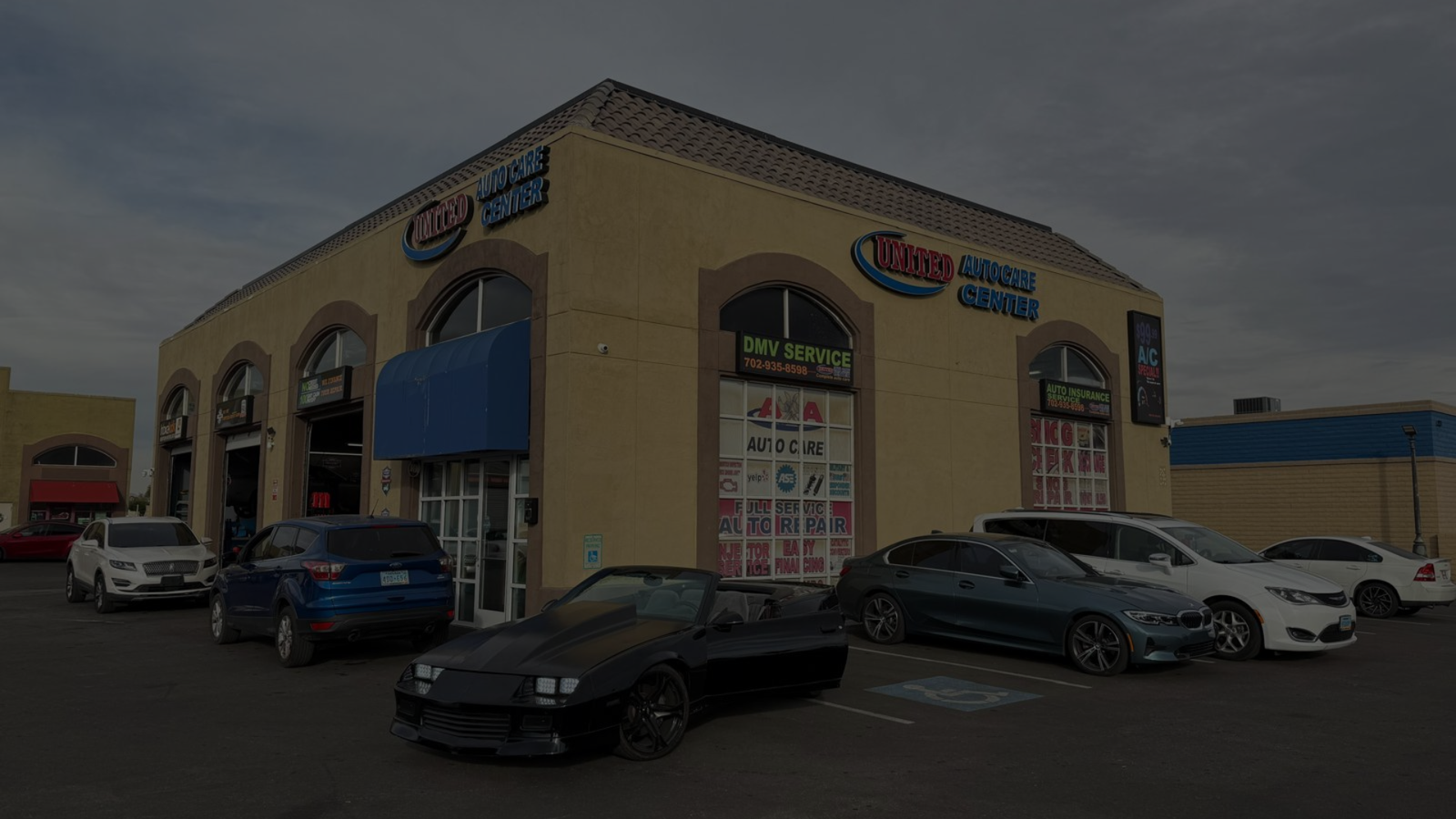
3560 E Tropicana Ave #800, Las Vegas, NV 89121, United States
+1 702-444-4468
info@unitedautocarecenter.com

United Auto Care Center is Las Vegas’s trusted specialist for expert engine and transmission repair, high-performance AC service, and advanced ECU/PCM car programming. Since 2017, our ASE Certified technicians have provided dealership-level expertise with the honesty and fair pricing of a local shop.
-
3560 E Tropicana Ave #800, Las Vegas, NV 89121, United States
Adress
-
+1 702-444-4468
Phone
-
info@unitedautocarecenter.com
Mail
How to Negotiate Auto Repair Costs and Get Better Prices
United Auto Care Center — Trusted Auto Repair in Las Vegas Since 2017
Auto repairs can become expensive, especially when a vehicle needs major mechanical work or several repairs at the same time.
But receiving a repair estimate does not mean your only options are to immediately approve everything or walk away.
There are practical ways to discuss auto repair costs, understand where your money is going, and ask whether lower-cost options are available without compromising necessary repairs.
If you are looking for affordable auto repair in Las Vegas, this guide explains how to talk with your mechanic about pricing, compare your options, and make better-informed repair decisions.
Can You Negotiate Auto Repair Costs?
Sometimes.
Auto repair pricing includes several components, and not every part of an estimate will necessarily be negotiable.
A typical repair estimate may include:
| Cost | What It Covers |
|---|---|
| Parts | Components required for the repair |
| Labor | Technician time required to complete the job |
| Diagnostic Fees | Testing and inspection used to identify the problem |
| Fluids & Materials | Oil, coolant, refrigerant, cleaners, and other materials |
| Shop Fees | Applicable service or supply charges |
| Taxes | Required taxes |
| Total | Estimated complete repair cost |
Instead of simply asking:
“Can you make it cheaper?”
Ask questions that help you understand where there may actually be flexibility.
1. Ask for a Detailed Repair Estimate
Start by understanding exactly what you are paying for.
Ask the repair shop for an estimate that separates major costs such as parts, labor, diagnostic charges, and applicable fees.
Then review it before approving the work.
You can ask:
“Can you walk me through this estimate?”
A clear explanation can help you identify which costs are necessary and whether alternative repair options exist.
2. Ask Which Repairs Are Urgent
If your estimate includes several repairs, you may not necessarily need to complete everything at the same time.
Ask your mechanic:
“Which repairs need to be done now, and which ones can safely wait?”
The answer can help you prioritize your budget.
For example, a safety-related problem or a mechanical issue that could cause additional damage may need immediate attention.
Other maintenance recommendations may potentially be scheduled later.
The important point is to make that decision based on the condition of your vehicle and the technician's explanation.
3. Ask Whether Different Parts Options Are Available
Parts can represent a significant portion of some repair bills.
Depending on the vehicle and repair, different parts options may be available.
These can include:
* OEM parts
* Aftermarket parts
* Remanufactured components
* Rebuilt components
Ask:
“Are there different parts options available for this repair?”
Then ask about the differences in price, expected performance, availability, and applicable warranty coverage.
The cheapest part is not automatically the best value.
Your goal should be finding an appropriate balance between cost, quality, and reliability.
4. Ask Whether There Are Current Specials or Coupons
Before approving the repair, ask whether the shop currently has any applicable service specials or coupons.
A simple question can be:
“Are there any current specials that apply to this service?”
Discounts may vary depending on the repair and current promotions, so confirm the details directly with the repair shop.
5. Compare Estimates for Expensive Repairs
For a major non-emergency repair, you may choose to compare estimates from more than one repair shop.
However, make sure you are comparing equivalent work.
* A lower estimate may involve:
* Different replacement parts
* Different warranty coverage
* Different diagnostic procedures
* Different included services
* Different labor requirements
Instead of comparing only the final number, compare what is actually included in each estimate.
6. Ask Why the Repair Costs What It Does
Some repairs seem expensive because customers only see the replacement part.
Labor can be a significant part of the cost.
A relatively inexpensive component may require substantial disassembly to reach and replace.
Ask your mechanic:
“Can you explain what makes this repair cost this amount?”
Understanding the repair process can help you determine whether the estimate makes sense.
7. Ask If Related Repairs Can Save Labor Costs
Sometimes multiple repairs involve accessing the same area of the vehicle.
If one component is already being removed, completing another necessary repair at the same time may reduce duplicated labor later.
Ask:
“Since you're already working in this area, are there any related repairs that could save labor if completed now?”
This does not mean automatically approving additional work.
Ask the technician to explain why the additional repair is recommended and whether doing it together actually changes the labor required.
8. Do Not Negotiate by Comparing Random Online Parts Prices
Customers sometimes find a replacement part online and assume the repair should cost approximately the same amount.
But the part itself is only one component of professional auto repair.
A shop's price may also account for:
- Diagnosis
- Technician labor
- Equipment
- Installation
- Testing
- Shop operations
- Applicable warranty obligations
Online parts prices can provide context, but they do not necessarily represent the total cost of properly diagnosing and completing a repair.
9. Ask Before Authorizing Additional Repairs
One of the easiest ways to control your repair budget is to establish clear authorization expectations.
Tell the shop:
“Please contact me before performing additional work that changes the estimated cost.”
If technicians discover another issue, you can then review:
What they found
Why it needs repair
How urgent it is
What it will cost
Whether it can wait
This helps prevent surprises when you receive the final bill.
10. Ask About Diagnostic Fees Before Leaving the Vehicle
Diagnosis takes technician time and may require specialized equipment.
Before leaving your vehicle, ask:
“Is there a diagnostic charge, and how does it apply if I approve the repair?”
Policies can vary by repair shop and type of diagnosis.
Understanding the policy beforehand helps you compare your options more accurately.
11. Ask About Warranty Coverage
The lowest repair price does not necessarily provide the lowest long-term cost.
Imagine comparing two repairs where one uses a different part or provides different warranty coverage.
The initial price difference may not tell the whole story.
Before approving work, ask:
Is there a warranty?
What does it cover?
Does it include parts?
Does it include labor?
How long does it apply?
Are there exclusions?
Compare overall value, not just the initial bill.
12. Be Direct About Your Budget
If a repair is more expensive than you expected, tell the shop.
You can say:
“My budget is limited. What needs to be handled first?”
or:
“Is there another appropriate repair option that would reduce the cost?”
This gives the mechanic an opportunity to explain whether there are alternatives.
There may not always be a cheaper safe or appropriate solution, but asking gives you more information before making your decision.
What NOT to Do When Negotiating Auto Repair Prices
Trying to save money does not mean aggressively demanding a discount.
Avoid strategies such as:
Demanding that a shop match an unrelated online parts price
Choosing repairs based only on the lowest estimate
Automatically rejecting diagnostic charges
Delaying a safety-critical repair solely to save money
Asking technicians to skip necessary repair procedures
Approving work without understanding the estimate
The objective is not simply to get the cheapest repair.
It is to get appropriate repair work at a price you understand.
Better Questions to Ask Your Mechanic
Instead of saying:
“That's too expensive. Give me a discount.”
Try asking:
| Instead of This | Ask This |
|---|---|
| Can you make it cheaper? | Are there other appropriate parts options? |
| Why is this so expensive? | Can you explain the parts and labor costs? |
| Do I need all of this? | Which repairs are urgent and which can wait? |
| I found the part cheaper online. | What is included in your parts and repair price? |
| Can you remove something? | Are there any optional services in this estimate? |
| Give me your lowest price. | Are there any current specials that apply? |
These questions give you useful information instead of turning the conversation into a price argument.
How to Save Money on Auto Repairs in Las Vegas
Las Vegas driving conditions can be demanding on vehicles, particularly during periods of extreme heat.
A good long-term strategy is to address problems before they develop into larger repairs.
Consider:
Following appropriate maintenance intervals
Paying attention to warning lights
Investigating unusual noises
Checking fluid leaks
Addressing overheating problems quickly
Maintaining the cooling and A/C systems
Keeping repair and maintenance records
Asking questions before authorizing major work
Saving money on car repairs is often less about negotiating at the counter and more about preventing small problems from becoming expensive ones.
Looking for Auto Repair in Las Vegas?
United Auto Care Center provides automotive repair and diagnostic services for drivers in Las Vegas, Nevada.
Services include engine repair, transmission repair, brake service, A/C repair, check engine diagnostics, oil services, battery-related services, and other automotive repairs.
If you receive a repair recommendation, ask questions about the diagnosis, estimate, parts, and repair priorities before making your decision.
Visit United Auto Care Center to learn more about available auto repair services in Las Vegas.
Frequently Asked Questions
You can ask whether different repair options, parts choices, applicable specials, or repair priorities are available. Some costs may be fixed, so the most useful approach is to understand the estimate and ask where alternatives exist.
Start by reviewing the estimate, prioritizing urgent repairs, asking about appropriate parts options, checking for applicable specials, and discussing your budget with the repair shop.
For expensive non-emergency repairs, comparing estimates can provide additional information. Make sure each estimate covers comparable parts, labor, diagnostic work, and warranty terms.
You can ask whether alternative parts are appropriate for your vehicle and repair. Ask about the differences in price, quality, availability, and warranty before deciding.
Review what is included in the estimate, ask the mechanic to explain the diagnosis and required labor, compare parts options when appropriate, and consider obtaining another professional estimate for a major non-emergency repair.
Be direct about your budget and ask which repairs are most urgent, which can potentially wait, and whether appropriate lower-cost alternatives are available.
Not necessarily. Compare diagnosis, parts, labor, communication, documentation, and warranty coverage in addition to the total price.
Final Takeaway
Getting a better price on auto repair is not just about asking for a discount.
The strongest approach is to understand the estimate, ask the right questions, prioritize necessary repairs, compare appropriate options, and communicate your budget clearly.
Before approving a major repair, make sure you understand:
What needs to be repaired. Why it needs to be repaired. What you are paying for. And what alternatives may be available.