3560 E Tropicana Ave #800, Las Vegas, NV 89121, United States
+1 702-444-4468
info@unitedautocarecenter.com

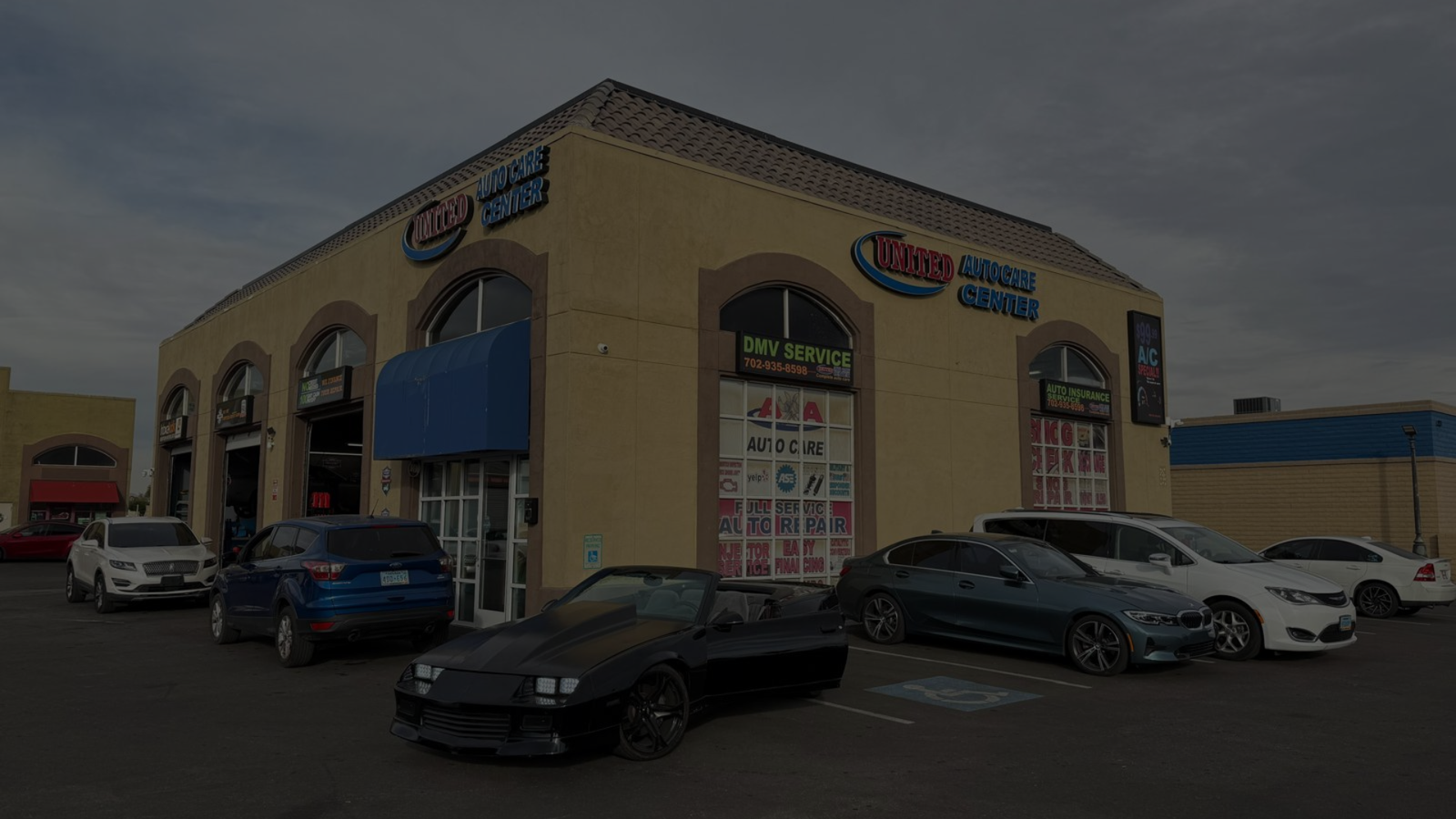
United Auto Care Center is Las Vegas’s trusted specialist for expert engine and transmission repair, high-performance AC service, and advanced ECU/PCM car programming. Since 2017, our ASE Certified technicians have provided dealership-level expertise with the honesty and fair pricing of a local shop.
-
3560 E Tropicana Ave #800, Las Vegas, NV 89121, United States
Adress
-
+1 702-444-4468
Phone
-
info@unitedautocarecenter.com
Mail
Understanding Your Car’s Warning Lights: What They Mean and What to Do
United Auto Care Center — Trusted Auto Repair in Las Vegas Since 2017
You're driving when suddenly a symbol appears on your dashboard.
A yellow engine.
A red oil can.
A battery symbol.
Or maybe a temperature warning you've never seen before.
What does it mean?
And more importantly:
Can you keep driving, or should you stop the car?
Your vehicle's dashboard warning lights are designed to alert you to problems, system conditions, and maintenance needs. Some warnings simply tell you that a system needs attention, while others can indicate a condition that requires you to stop driving as soon as it is safe.
If you're trying to understand your car warning lights, here's what the most common dashboard symbols can mean and what you should do next.
What Do Dashboard Warning Light Colors Mean?
The exact meaning of a dashboard light depends on your vehicle, so your owner's manual should always be your primary reference.
However, colors commonly provide a general indication of urgency.
| Warning Light Color | General Meaning | What to Do |
|---|---|---|
| Green / Blue | System operating or activated | Usually informational |
| Yellow / Amber | System needs attention | Inspect or diagnose soon |
| Red | Potentially serious condition | Check immediately; stopping may be necessary |
Do not rely on color alone.
A warning's meaning and recommended action depend on the specific vehicle and condition.
1. Check Engine Light
The check engine light is one of the most recognized dashboard warnings.
It can appear for many different reasons involving engine management, emissions-related systems, sensors, electrical circuits, and other monitored systems.
A check engine light does not automatically mean your engine is failing.
The vehicle needs diagnostic information to determine what triggered the warning.
Solid vs. Flashing Check Engine Light
This distinction matters.
Solid Check Engine Light
A steady check engine light generally means the vehicle has detected a fault that needs attention.
If the vehicle otherwise appears to operate normally, arrange diagnostic service rather than ignoring the light.
Flashing Check Engine Light
A flashing check engine light can indicate a more serious condition, such as a severe misfire that may damage other components.
Reduce unnecessary driving and follow your vehicle manufacturer's instructions.
If the engine is shaking severely, losing significant power, overheating, or behaving abnormally, stop driving when safe and seek professional assistance.
2. Oil Pressure Warning Light
The oil pressure warning is commonly represented by an oil-can symbol.
This is different from a routine oil-change reminder.
A red oil pressure warning can indicate that the engine does not have adequate oil pressure.
Continuing to run an engine without proper oil pressure can cause severe damage.
If the oil pressure warning appears while driving:
Safely pull over.
Shut off the engine.
Follow the manufacturer's instructions.
Seek professional assistance if the cause is not immediately understood.
Do not assume that simply adding oil will solve an oil-pressure problem.
Oil Change Reminder vs. Oil Pressure Warning
These are not the same.
Oil Change / Maintenance Reminder
Indicates scheduled maintenance may be due.
Oil Pressure Warning
Can indicate a potentially serious lubrication problem.
Understanding this difference can help prevent expensive engine damage.
3. Engine Temperature Warning Light
The engine temperature warning indicates that the engine may be overheating.
Possible causes can involve:
Low coolant
Coolant leak
Water pump problem
Thermostat problem
Cooling fan problem
Radiator problem
Other cooling-system conditions
If your engine is overheating, continuing to drive can potentially cause major engine damage.
Safely stop the vehicle and follow the manufacturer's instructions.
Never Open a Hot Cooling System
If the engine has overheated, do not immediately remove a hot radiator or pressurized coolant-system cap.
Hot coolant can be under pressure and can cause serious burns.
Allow the system to cool and follow the manufacturer's procedures.
4. Battery / Charging System Warning Light
The battery-shaped dashboard symbol doesn't necessarily mean:
“You need a new battery.”
It may indicate a problem with the vehicle's charging system.
Possible causes can involve:
Alternator
Battery
Wiring
Connections
Drive belt
Charging-system components
If the charging system stops operating properly, the vehicle may eventually lose electrical power and shut down.
Have the system tested rather than automatically replacing the battery.
5. Brake Warning Light
A red brake warning deserves attention.
Depending on the vehicle, it may be associated with:
Parking brake
Brake fluid
Hydraulic system
Other braking-system conditions
First, verify whether the parking brake is fully released.
If the warning remains on — especially if braking performance or pedal feel has changed — have the vehicle inspected promptly.
If braking ability is reduced, do not continue driving an unsafe vehicle.
6. ABS Warning Light
ABS stands for Anti-lock Braking System.
If the ABS warning light appears, the anti-lock braking function may have a fault.
The vehicle's conventional braking system may still operate depending on the problem, but ABS functionality can be affected.
Because braking systems are safety-critical, have the warning diagnosed.
If the ABS light appears together with other brake warnings or abnormal braking behavior, take the condition more seriously.
7. Tire Pressure Warning Light
The Tire Pressure Monitoring System, or TPMS, can alert you when tire pressure is outside the expected range or when the monitoring system has a fault.
Low tire pressure can affect:
Handling
Braking
Fuel efficiency
Tire wear
Inspect the tires and check pressures according to the vehicle manufacturer's specifications.
If a tire is rapidly losing air or appears damaged, avoid driving on it.
8. Airbag / SRS Warning Light
The airbag warning may indicate a fault within the Supplemental Restraint System.
Depending on the vehicle, this can involve:
Airbags
Sensors
Seat-belt-related components
Wiring
Control modules
Because this system is part of the vehicle's safety equipment, the warning should be diagnosed rather than ignored.
9. Traction Control / Stability Control Light
A traction or stability control symbol may illuminate when the system is actively helping control wheel slip.
However, if the warning remains illuminated continuously, it may indicate:
System disabled
Sensor problem
ABS-related fault
Stability-control fault
Other electronic issue
Consult the vehicle manual to understand the specific symbol and behavior.
10. Transmission Warning Light
Some vehicles have a dedicated transmission warning or display a message when the transmission control system detects a problem.
Possible symptoms may include:
Rough shifting
Delayed shifting
Transmission slipping
Reduced performance
Vehicle stuck in one gear
Transmission overheating
A transmission warning does not automatically mean the transmission needs replacement.
Diagnostic testing can help determine the actual cause.
11. Coolant Level Warning
Some vehicles monitor coolant level separately from engine temperature.
A low coolant warning may indicate:
Low coolant level
Coolant leak
Sensor issue
Other cooling-system condition
Do not repeatedly add coolant without determining why the level is dropping.
If coolant is disappearing, find the cause.
12. Power Steering Warning Light
A steering wheel symbol or steering warning can indicate a problem with the power steering system.
Modern vehicles may use:
Hydraulic power steering
Electric power steering
Electro-hydraulic systems
If steering suddenly becomes significantly harder, the vehicle may be difficult to control.
Reduce speed, stop safely, and have the system evaluated.
13. Low Fuel Warning
This warning is straightforward:
Your fuel level is low.
But repeatedly driving with extremely low fuel can leave you stranded and may not be ideal for certain fuel-system components.
Refuel before the vehicle reaches an empty condition.
14. Washer Fluid Warning
A washer-fluid warning generally indicates low windshield washer fluid.
It isn't usually a mechanical emergency.
However, windshield visibility is a safety issue, particularly in dirty or poor weather conditions.
Refill with the appropriate washer fluid.
15. Door, Hood, or Trunk Warning
A dashboard warning may indicate that:
Door is open
Hood is not fully latched
Trunk or liftgate is open
Do not ignore a hood warning.
A hood that isn't properly secured can create a serious hazard while driving.
16. Seat Belt Warning
The seat belt warning reminds occupants to fasten their seat belts.
If the warning remains active even when seat belts are correctly fastened, there may be a sensor or restraint-system issue.
Which Warning Lights Mean You Should Stop Driving?
The correct response always depends on the vehicle and situation.
However, warnings that can indicate potentially serious conditions include:
Oil pressure warning
Engine overheating warning
Serious brake warning
Certain steering warnings
Flashing check engine light with severe engine symptoms
Other red warnings associated with critical vehicle systems
Also stop driving if you experience:
Smoke
Severe overheating
Significant fluid leak
Loss of braking ability
Severe engine knocking
Major loss of power
Strong burning smell
Steering difficulty
Vehicle behaving unpredictably
When the vehicle appears unsafe, stop in a safe location and seek professional assistance.
Can You Drive With a Check Engine Light?
It depends.
If the check engine light is solid and the vehicle is operating normally, you may be able to drive carefully while arranging diagnostic service.
But if the light is flashing or accompanied by:
Severe shaking
Loss of power
Overheating
Smoke
Strong fuel smell
Other serious symptoms
the condition may require more immediate attention.
Always follow the guidance in your vehicle's owner's manual.
Why You Shouldn't Just Clear a Warning Light
A scan tool can sometimes clear diagnostic trouble codes and turn off certain warning lights.
But:
Clearing the light does not repair the problem.
If the underlying fault remains, the warning may return.
Clearing codes can also remove useful diagnostic information technicians could use to understand the problem.
A better approach is:
Warning Light → Scan → Testing → Cause → Repair → Verification
Does a Warning Light Tell You Which Part to Replace?
Usually not.
This is one of the biggest misconceptions about modern vehicle diagnostics.
Suppose a diagnostic trouble code mentions a particular sensor or system.
That does not necessarily prove that a specific component needs replacement.
The underlying cause could involve:
Wiring
Electrical connections
Voltage
Another component
Mechanical problem
Sensor itself
Trouble codes provide diagnostic information.
Testing determines the cause.
What Should You Do When a Warning Light Appears?
Use this basic process:
Step 1: Identify the Symbol
Look at the dashboard carefully.
Step 2: Check the Color
Red warnings often deserve more immediate attention than informational lights.
Step 3: Observe the Vehicle
Is it:
Overheating?
Shaking?
Losing power?
Making unusual noises?
Smelling unusual?
Braking differently?
Steering differently?
Step 4: Check the Owner's Manual
Your vehicle manufacturer provides specific information about dashboard symbols.
Step 5: Decide Whether It Is Safe to Continue Driving
If there is any significant safety concern or risk of mechanical damage, stop driving.
Step 6: Have the Vehicle Diagnosed
For diagnostic warnings, identify the cause before replacing parts.
Quick Dashboard Warning Light Guide
| Warning | Possible Meaning | General Response |
|---|---|---|
| Check Engine | Engine/emissions/control-system fault | Diagnose |
| Flashing Check Engine | Potentially serious engine/misfire condition | Prompt attention |
| Oil Pressure | Possible loss of oil pressure | Stop safely |
| Temperature | Engine overheating | Stop safely |
| Battery | Charging-system problem | Test charging system |
| Brake | Brake/parking brake/hydraulic issue | Inspect promptly |
| ABS | Anti-lock braking fault | Diagnose |
| TPMS | Tire pressure/system issue | Check tires |
| Airbag/SRS | Restraint-system fault | Diagnose |
| Transmission | Transmission/control fault | Diagnose |
| Power Steering | Steering-system fault | Inspect promptly |
This table is only a general reference.
Your vehicle owner's manual provides the correct interpretation for your specific dashboard.
Why Multiple Warning Lights Can Come On at Once
Sometimes one problem can trigger several dashboard warnings.
Modern vehicle systems communicate with one another.
For example, a fault involving:
Battery voltage
ABS sensor
Engine management
Network communication
can potentially affect more than one system.
Multiple warning lights do not necessarily mean multiple unrelated components failed simultaneously.
Diagnostic testing can help identify the underlying issue.
What If a Warning Light Comes On and Then Goes Away?
Don't automatically ignore it.
An intermittent warning may indicate a problem that occurs only under certain conditions.
The vehicle may still have stored diagnostic information.
Write down:
Which light appeared
When it happened
Vehicle speed
Engine temperature
Weather conditions
What the vehicle was doing
Whether you noticed other symptoms
This information can help the technician investigate an intermittent problem.
Warning Lights After a Repair
If a new warning appears immediately after automotive repair, contact the repair facility and explain what happened.
That does not automatically mean the previous repair was performed incorrectly.
The warning could be:
Related to the repair
An unrelated problem
A new fault
An existing condition becoming detectable
The vehicle should be evaluated before conclusions are made.
Dashboard Warning Light Diagnostics in Las Vegas
Extreme Las Vegas temperatures can put additional stress on several vehicle systems.
If a warning light appears — particularly one involving:
Engine temperature
Charging system
Engine performance
Transmission
Brakes
don't ignore it simply because the vehicle still drives.
Early diagnosis can help determine whether you're dealing with a minor fault, maintenance issue, or potentially serious repair.
Warning Light Diagnostics at United Auto Care Center
United Auto Care Center provides automotive diagnostic and repair services for drivers in Las Vegas, Nevada.
If your vehicle displays:
Check engine light
Engine warning
Charging-system warning
Brake warning
ABS warning
Transmission warning
Temperature warning
Other unexpected dashboard warnings
diagnostic testing can help determine what the vehicle is reporting and what is causing the problem.
United Auto Care Center also provides engine repair, transmission repair, brake service, A/C repair, electrical diagnostics, suspension repair, oil services, battery-related services, and preventive maintenance.
Visit United Auto Care Center to learn more about automotive diagnostic and repair services in Las Vegas.
Frequently Asked Questions
Generally, green and blue lights are informational, yellow or amber lights indicate something needs attention, and red warnings may indicate a more serious condition. Always check your owner's manual for the specific warning.
Several warnings can indicate serious conditions, particularly oil-pressure, overheating, brake-system, and certain steering warnings. The severity depends on the vehicle and symptoms.
A steady check engine light may allow limited driving if the vehicle operates normally, but it should be diagnosed. A flashing check engine light or one accompanied by severe symptoms requires more immediate attention.
The battery symbol often indicates a charging-system problem rather than simply a bad battery. The battery, alternator, wiring, connections, and related components may need testing.
A red oil-pressure warning can indicate inadequate engine oil pressure. Safely stop the vehicle, shut off the engine, and follow the manufacturer's guidance. Continuing to drive could cause severe engine damage.
Safely stop the vehicle and allow the engine to cool according to manufacturer instructions. Do not open a hot pressurized cooling system.
Some diagnostic tools can clear certain warnings, but clearing a code does not repair the underlying problem and can erase useful diagnostic information.
Modern vehicle systems communicate electronically, so one electrical, sensor, voltage, or communication problem can sometimes trigger several warnings.
United Auto Care Center provides automotive diagnostic services for drivers in Las Vegas, including check engine light and electrical diagnostics.
Final Takeaway
Your dashboard warning lights are your vehicle's way of telling you:
“Something needs your attention.”
But not every light means the same thing.
Remember:
Green / Blue → Usually information
Yellow / Amber → Pay attention and investigate
Red → Potentially serious; check immediately
And some warnings — particularly oil pressure, overheating, serious brake warnings, and certain steering conditions — can mean you should stop driving as soon as it is safe.
Most importantly:
A warning light is not a diagnosis.
The correct process is:
Warning Light → Diagnostic Information → Testing → Cause → Repair → Verification
Don't replace parts based only on a dashboard symbol.
Find out what your vehicle is actually trying to tell you.