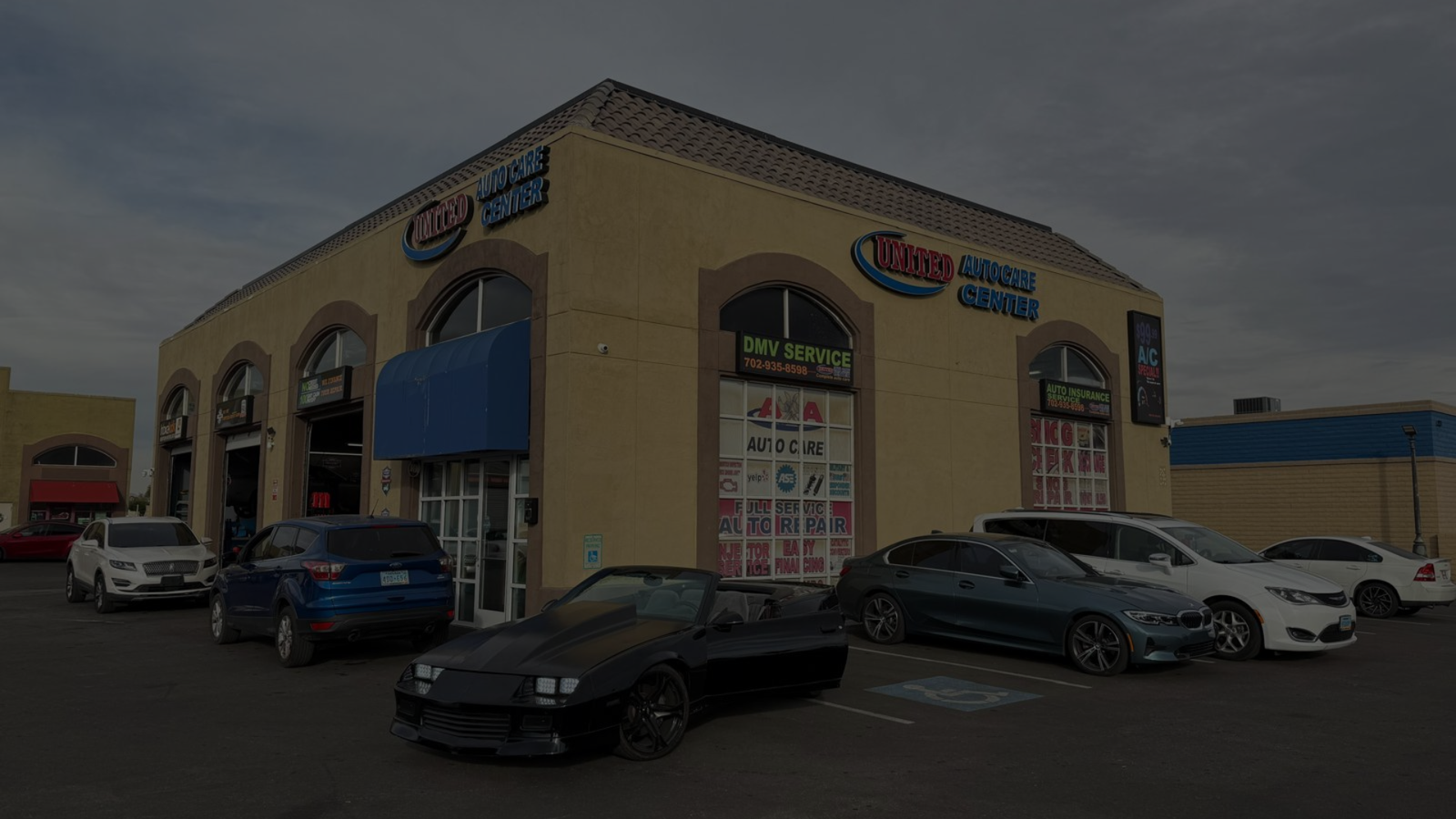
3560 E Tropicana Ave #800, Las Vegas, NV 89121, United States
+1 702-444-4468
info@unitedautocarecenter.com

United Auto Care Center is Las Vegas’s trusted specialist for expert engine and transmission repair, high-performance AC service, and advanced ECU/PCM car programming. Since 2017, our ASE Certified technicians have provided dealership-level expertise with the honesty and fair pricing of a local shop.
-
3560 E Tropicana Ave #800, Las Vegas, NV 89121, United States
Adress
-
+1 702-444-4468
Phone
-
info@unitedautocarecenter.com
Mail
How Much Should Engine Diagnostics Cost?
United Auto Care Center — Trusted Auto Repair in Las Vegas Since 2017
When your check engine light comes on or your vehicle starts running poorly, one of the first questions you may have is:
How much should engine diagnostics cost?
The answer depends on the vehicle, the symptoms, the type of testing required, and how much technician time is needed to identify the problem.
An engine diagnostic is not always as simple as connecting a scanner and reading a trouble code. Modern vehicles contain computers, sensors, wiring, modules, and mechanical systems that can produce similar symptoms for very different reasons.
If you're looking for engine diagnostics in Las Vegas, understanding what you're paying for can help you evaluate a diagnostic fee and make a more informed repair decision.
How Much Does an Engine Diagnostic Cost?
There is no single diagnostic price that applies to every vehicle or every problem.
The cost can vary based on:
Vehicle make and model
Type of problem
Diagnostic complexity
Technician time
Required testing
Diagnostic equipment
Electrical troubleshooting
Whether additional testing is necessary
Some problems can be identified relatively quickly.
Others may require extensive testing before the technician can confidently determine the cause.
For that reason, it is better to ask what is included in the diagnostic fee than to judge the service only by the initial price.
What Are You Paying for With an Engine Diagnostic?
A professional diagnostic service may involve several steps.
Depending on the symptoms, a technician may:
1. Discuss the vehicle's symptoms with you
2. Perform a preliminary inspection
3. Connect professional diagnostic equipment
4. Retrieve diagnostic trouble codes
5. Review live vehicle data
6. Test sensors or components
7. Inspect wiring and electrical connections
8. Perform mechanical tests
9. Research technical service information
10. Determine the likely root cause
11. Recommend the appropriate next repair step
The goal is not simply to find a code.
The goal is to determine why the vehicle is experiencing the problem.
Is Reading a Check Engine Code the Same as Diagnosing the Car?
No.
This is one of the most important things vehicle owners should understand.
A scan tool may retrieve a Diagnostic Trouble Code, commonly called a DTC.
That code identifies a system or condition detected by the vehicle's computer.
It does not necessarily identify the exact component that should be replaced.
For example, a trouble code associated with a sensor does not automatically mean the sensor itself has failed.
The actual problem could potentially involve:
Wiring
Electrical connections
Another component
Vacuum or air leaks
Mechanical problems
Voltage problems
A related system affecting the sensor reading
The code gives the technician a starting point.
Diagnosis determines the cause.
Why Do Auto Repair Shops Charge Diagnostic Fees?
Professional diagnosis requires technician time, equipment, technical knowledge, and testing.
Modern automotive technicians may use:
Professional scan tools
Digital multimeters
Electrical testing equipment
Pressure gauges
Battery and charging-system testers
Smoke testing equipment
Specialized mechanical tools
Vehicle-specific technical information
The technician must then interpret the information produced by those tools.
You are paying for the process of identifying the problem — not simply for someone to plug a scanner into your car.
What Factors Affect Engine Diagnostic Cost?
Several factors can affect how much diagnostic work your vehicle requires.
1. Vehicle Make and Model
Some vehicles have more complex systems or require specialized diagnostic procedures.
Luxury, European, performance, hybrid, and newer vehicles may also require different equipment or technical information depending on the problem.
2. Type of Problem
A straightforward check engine light may require less diagnostic time than an intermittent electrical problem.
Examples of symptoms that may require different diagnostic approaches include:
Check engine light
Engine misfire
Rough idle
Vehicle won't start
Loss of power
Engine overheating
Poor fuel economy
Stalling
Electrical problems
Unusual engine noises
The symptom helps determine where the diagnostic process begins.
3. How Difficult the Problem Is to Reproduce
Some problems happen continuously.
Others occur only:
When the engine is cold
After driving for a certain amount of time
At highway speeds
During acceleration
In hot weather
Intermittently
Intermittent problems can require additional time because the technician may need to reproduce the condition before testing it.
4. Electrical Testing
Electrical problems can be particularly time-consuming.
A technician may need to inspect:
Wiring
Grounds
Connectors
Fuses
Relays
Sensors
Control modules
Voltage and resistance
Communication between modules
Finding an electrical short or intermittent wiring problem can require significantly more investigation than reading a diagnostic trouble code.
5. Additional Mechanical Testing
Sometimes computer data suggests a problem but additional mechanical testing is needed.
Depending on the symptoms, this could involve testing areas such as:
Fuel pressure
Cooling system pressure
Engine compression
Vacuum
Charging system
Ignition system
The diagnostic process depends on what the technician discovers during the initial inspection.
What Should Be Included in a Diagnostic Fee?
Before approving diagnostic work, ask what the fee covers.
A professional diagnostic process may include:
| Diagnostic Step | Purpose |
|---|---|
| Customer symptom review | Understand what the vehicle is doing |
| Initial inspection | Look for visible problems |
| Computer scan | Retrieve codes and system information |
| Live data review | Evaluate vehicle operation |
| Component testing | Confirm whether a suspected component is working |
| Electrical testing | Check wiring, voltage, connections, or circuits |
| Mechanical testing | Investigate possible mechanical causes |
| Diagnosis | Identify the likely source of the problem |
| Repair recommendation | Explain the next appropriate step |
Not every vehicle will require every step.
The important question is what testing is necessary to diagnose your specific problem.
7. What Type of Parts Will You Use?
Policies vary between auto repair shops.
Some facilities may apply all or part of a diagnostic charge toward certain repairs.
Others treat diagnosis and repair as separate services.
Neither approach should automatically be considered unusual.
Ask before authorizing the diagnosis:
“If I approve the repair, does any portion of the diagnostic fee apply toward it?”
This helps you understand the total expected cost before work begins.
Are Free Check Engine Light Scans the Same as Professional Diagnostics?
Not necessarily.
A basic code scan can be useful because it can identify stored trouble codes.
However, retrieving a trouble code is only one part of the diagnostic process.
For example:
Code retrieved → system identified → testing performed → root cause determined → repair recommended
Stopping after the first step can lead to guessing.
That can become expensive if parts are replaced without confirming the actual failure.
Is Paying for Professional Diagnostics Worth It?
Professional diagnosis can be valuable when it prevents unnecessary repairs.
Imagine replacing a component because a trouble code mentions it, only to discover that the real problem was damaged wiring.
You may end up paying for:
A part you did not need
Installation labor
Additional diagnostic work
The actual repair afterward
Paying for proper testing can help identify the underlying problem before repair decisions are made.
Why a Cheap Diagnostic Isn't Always the Cheapest Option
When comparing shops, you may see different diagnostic prices.
The lowest price does not necessarily provide the best overall value.
Ask what you are receiving.
For example:
Option A
A quick scan retrieves a trouble code.
Option B
A technician retrieves the code, reviews data, tests the affected system, confirms the failure, and explains the recommended repair.
Those services are not necessarily equivalent.
The better question is:
“What will you do to determine the actual cause of my vehicle's problem?”
Questions to Ask Before Paying for Engine Diagnostics
Before leaving your vehicle at an auto repair shop, ask:
1. What is the diagnostic fee?
2. What does the diagnostic fee include?
3. How much diagnostic time does it cover?
4. Will you contact me if additional testing is required?
5. Will I receive an explanation of what you found?
6. Will you provide a repair estimate after diagnosis?
7. Does the diagnostic fee apply toward the repair?
8. Will you contact me before performing repairs?
9. What happens if the problem cannot be diagnosed within the initial testing time?
These questions can help prevent misunderstandings.
Red Flags With Diagnostic Pricing
Be cautious if a shop:
Cannot explain what the diagnostic charge covers
Recommends expensive repairs based only on a trouble code
Replaces parts without explaining the testing performed
Adds additional diagnostic charges without communicating with you
Cannot explain what it found
Pressures you to approve a major repair immediately without a clear diagnosis
Good diagnosis should produce useful information about the condition of your vehicle.
Engine Diagnostics in Las Vegas
Las Vegas driving conditions can be demanding on vehicles.
Extreme temperatures can place additional stress on batteries, cooling systems, A/C systems, electrical components, and other vehicle systems.
If your vehicle develops symptoms such as a warning light, rough running, reduced performance, overheating, starting problems, or unusual behavior, proper diagnosis can help determine the cause before parts are replaced.
When comparing engine diagnostic services in Las Vegas, consider the technician's diagnostic process and experience in addition to the advertised price.
Engine Diagnostic Service at United Auto Care Center
United Auto Care Center provides automotive diagnostic and repair services for drivers in Las Vegas, Nevada.
If your vehicle has a check engine light, performance problem, starting issue, unusual engine behavior, or another automotive concern, diagnosis is an important first step toward identifying the appropriate repair.
Our automotive services include engine repair, transmission repair, brake service, A/C repair, check engine light diagnostics, electrical diagnostics, battery-related service, oil services, and other vehicle repairs.
Visit United Auto Care Center to learn more or contact the shop for current diagnostic pricing and service information.
Frequently Asked Questions
Engine diagnostic pricing varies by vehicle, problem, shop, required testing, and technician time. Ask the repair facility for its current diagnostic fee and exactly what the service includes before authorizing work.
Diagnosis requires technician time, professional equipment, technical information, testing, and expertise to determine the underlying cause of a vehicle problem.
No. A scan retrieves diagnostic trouble codes and vehicle information. Additional testing may be required to determine what actually caused the code.
Not necessarily. A diagnostic trouble code usually identifies a system or detected condition. Technicians may need to perform additional testing before determining which component or condition is responsible.
That depends on the repair shop's policy. Ask whether any portion of the diagnostic fee is applied toward an approved repair before authorizing the diagnostic service.
Electrical problems can require extensive testing of wiring, connectors, sensors, modules, voltage, grounds, and circuits. Intermittent electrical problems may also take additional time to reproduce and isolate.
Proper diagnosis can help prevent unnecessary parts replacement and identify the underlying cause of the problem before you approve repairs.
Drivers in Las Vegas can contact United Auto Care Center to discuss check engine light diagnostics, engine problems, electrical concerns, and other automotive diagnostic services.
Final Takeaway
When asking “How much should engine diagnostics cost?”, don't evaluate the service by price alone.
Ask what the diagnostic fee actually includes.
A professional diagnosis should go beyond simply retrieving a trouble code. The objective is to use testing, vehicle data, technician experience, and diagnostic equipment to identify the underlying problem before recommending repairs.
Before authorizing diagnostic work, ask:
What does the fee cover?
What testing will be performed?
Will you contact me before additional diagnostic time is added?
Will I receive a repair estimate after the problem is identified?
Understanding those answers can help you determine whether you're receiving real diagnostic value for your money